
Different Suit Styles Explained With 5 Easy Checks
Different suit styles are easiest to understand by looking at five things: the jacket front, the number of pieces, the lapels, the fit, and the occasion. These descriptions overlap. A single suit can be single-breasted, three-piece, peak-lapel, and generously cut at the same time.
For a first suit intended for ordinary office wear and suit-appropriate events, a navy or charcoal two-piece with a single-breasted jacket and notch lapels is a practical starting point. Try it on with the shirt and shoes you plan to wear, then check how it looks when you sit and move.
An invitation or workplace dress code should guide the final choice. A suit that works for a relaxed dinner may not meet a black-tie request.
Different Suit Styles at a Glance
| Description | What it tells you | What it does not tell you |
| Single-breasted | Jacket has one column of front buttons | Whether it is slim or roomy |
| Double-breasted | Jacket has an overlapping front and two button columns | Whether it includes a waistcoat |
| Two-piece | Matching jacket and trousers | Lapel shape or jacket closure |
| Three-piece | Matching jacket, trousers, and waistcoat | Whether the jacket is single-breasted |
| Notch or peak lapel | Shape of the jacket’s folded front edges | The whole outfit’s dress code |
| Slim, classic, or relaxed fit | Brand’s description of the cut | A standardized measurement across brands |
Read these terms together. “Navy two-piece, single-breasted, notch lapel” gives you a clearer picture than simply asking for a “modern suit.”
1 Check the Jacket Front
Single breasted suits
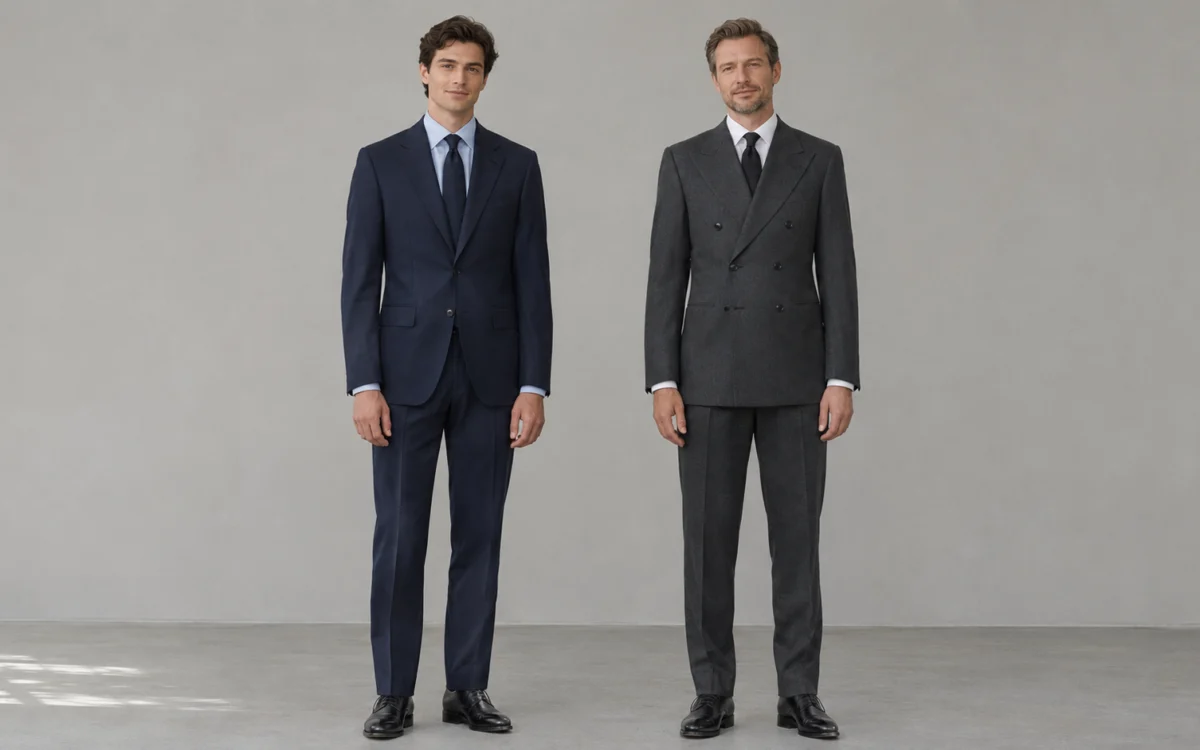
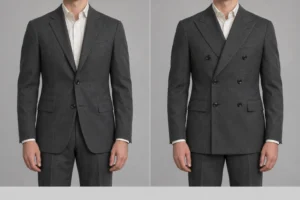
A single-breasted jacket has one column of buttons and a relatively narrow overlap at the front. You will commonly see two-button versions, alongside one-button and three-button designs.
If you want a quiet starting point, try a two-button jacket with notch lapels. Compare it with one other design while keeping the shirt and trousers similar. That makes the change in jacket shape easier to see.
Do not decide from the button count alone. Look at the jacket length, the opening below the fastening, and the way the lapels sit. A short, tight jacket and a longer, roomier jacket can both have two buttons but create very different outfits.
Double breasted suits
A double-breasted jacket has a wider overlapping front with two columns of buttons. Six-button fronts are familiar examples, but other arrangements exist. Some visible buttons are decorative; they are not all intended to fasten at once.
Suitsupply’s jacket detail guide shows several closure configurations, which is useful when comparing product photographs.
Try this style if you like a more prominent jacket front. Check it fastened, from the side as well as the front, and ask the fitter which buttons belong to that particular closure. Avoid choosing a smaller size just to pull the waist inward.
Neither closure requires a particular body type. Judge the actual garment on your body rather than ruling it out from a silhouette chart.
2 Count the Pieces
Two piece suits
A two-piece suit consists of a jacket and trousers made as a matching set. This is a useful format when you want fewer layers and a straightforward outfit.
Matching means more than being roughly the same color. Two separate navy garments can differ in texture, weave, and shade. They may make an intentional separates outfit, but they are not automatically a matching suit.
When buying suit separates, confirm that the jacket and trousers belong to the same suit range and fabric. This can also let you choose different jacket and trouser sizes without mixing unrelated cloths.
Three piece suits
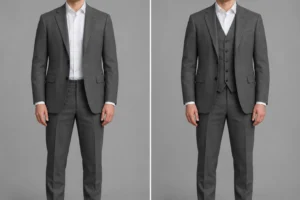
A three-piece suit adds a matching waistcoat, also called a vest. The extra garment changes the appearance through the middle of the outfit and gives you another fit decision to make.
Try all three pieces together. Check whether the waistcoat sits comfortably over the shirt, whether the trousers meet it neatly, and whether the jacket still closes without strain. Sitting down is especially useful here.
For example, a gray three-piece may be an option for a wedding that requests suits. If you expect to wear it without the waistcoat later, assess that combination during the fitting too. An extra piece is useful only if you will actually wear it.
3 Identify the Lapel Shape
Lapels are the folded edges running down the front of the jacket from the collar. Their shape is a separate decision from the number of buttons or pieces.
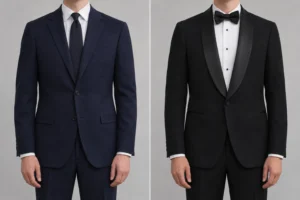
Notch lapels have an inward cut where the collar meets the lapel. They are a familiar choice on single-breasted business suits.
Peak lapels have tips that point upward toward the shoulders. They are common on double-breasted jackets and are also available on single-breasted designs.
Shawl collars form a continuous rounded curve. You will most often encounter them on tuxedo jackets and other eveningwear.
Indochino’s lapel guide provides photographed examples of these options. Use the pictures to learn the shapes, then look at the proportions of the jacket you are trying.
A peak lapel does not automatically make an outfit suitable for black tie. Equally, a notch lapel does not prevent a well-chosen suit from looking smart at work. Consider the complete garment and the event.

4 Compare Fit Separately From Style
Slim, tailored, classic, and relaxed are shopping labels. Their meanings vary between brands and ranges. For example, Brooks Brothers’ suit fit guide describes its own cuts; another maker may use different names for similar proportions.
Use the label to find a starting point, then try the clothes on. A slimmer cut may feel right in one range and restrictive in another.
During the fitting, check the following:
- Shoulders and collar: Look for an even resting position without an obvious gap or uncomfortable pressure.
- Jacket front: Fasten it as intended and look for pronounced pulling around the closure.
- Arms and back: Reach forward naturally rather than holding a rigid pose.
- Trouser seat and thighs: Sit down and walk a few steps in the shoes you plan to wear.
- Length and balance: View the outfit from the side and back as well as in a front-facing mirror.
Ask a tailor which changes are feasible before buying a suit that needs significant work. Do not assume every proportion can be corrected by shortening a sleeve or taking in the waist.
The useful question is whether the cut gives you the appearance and movement you want. A fit name alone cannot answer it.

5 Match the Suit to the Occasion
For an office where suits are expected, begin with the workplace’s usual level of formality. A restrained navy or charcoal outfit is an easy combination to assess before introducing strong patterns or unusual details.
For a wedding, read the invitation first. A daytime celebration, a relaxed outdoor reception, and a black-tie evening may call for different clothes. If the wording is unclear, ask the host rather than guessing from venue photographs.
For black tie, investigate proper eveningwear. A traditional tuxedo commonly uses silk-faced lapels and a matching trim down the trousers, details explained in Men’s Wearhouse’s suit and tuxedo comparison. A black business suit does not become a tuxedo when you add a bow tie.
For an occasion where you have chosen a black suit, our guide to shoes to wear with a black suit helps you finish the outfit. Choose the suit’s role first, then coordinate the footwear.
Three Outfit Briefs to Take Shopping
An everyday office suit: Try a navy two-piece, single-breasted jacket, notch lapels, a light shirt, and understated dress shoes. Assess whether that outfit matches your actual workplace.
A wedding suit with an extra layer: Try a gray three-piece and compare it with the waistcoat removed. Keep the shirt and tie unchanged so you can judge what the additional piece contributes.
A suit with a more prominent jacket front: Compare a charcoal double-breasted suit with a charcoal single-breasted version. Look at the overlap and lapels before changing color or adding accessories.
These are starting briefs, not fixed uniforms. Save photographs of the combinations you prefer and note what you liked about each one.
Frequently Asked Questions
How many different suit styles are there
There is no single useful total because categories overlap. Jacket closure, piece count, lapels, cut, cloth, and details can be combined in many ways. Learn the main features rather than memorizing an arbitrary numbered list.
Can a three piece suit be double breasted
Yes. Three-piece describes the matching garments in the set. Double-breasted describes a jacket closure. They refer to different features.
Is a slim fit suit more formal than a classic fit suit
No. The fit label alone does not establish formality. Consider the clothing, styling, occasion, and dress-code instructions together.
What is the difference between a suit and a blazer outfit
A suit has a matching jacket and trousers. A blazer can be worn with contrasting trousers as a separates outfit. Similar colors alone do not make the garments a matching set.
Which suit style should a beginner try first
For a general suit wardrobe, start by trying a navy or charcoal single-breasted two-piece with notch lapels. Compare another cut before deciding, and prioritize the events you actually attend.
Understanding different suit styles makes shopping more specific. Describe the closure, pieces, lapels, and fit you want, then check the finished outfit against the occasion.