
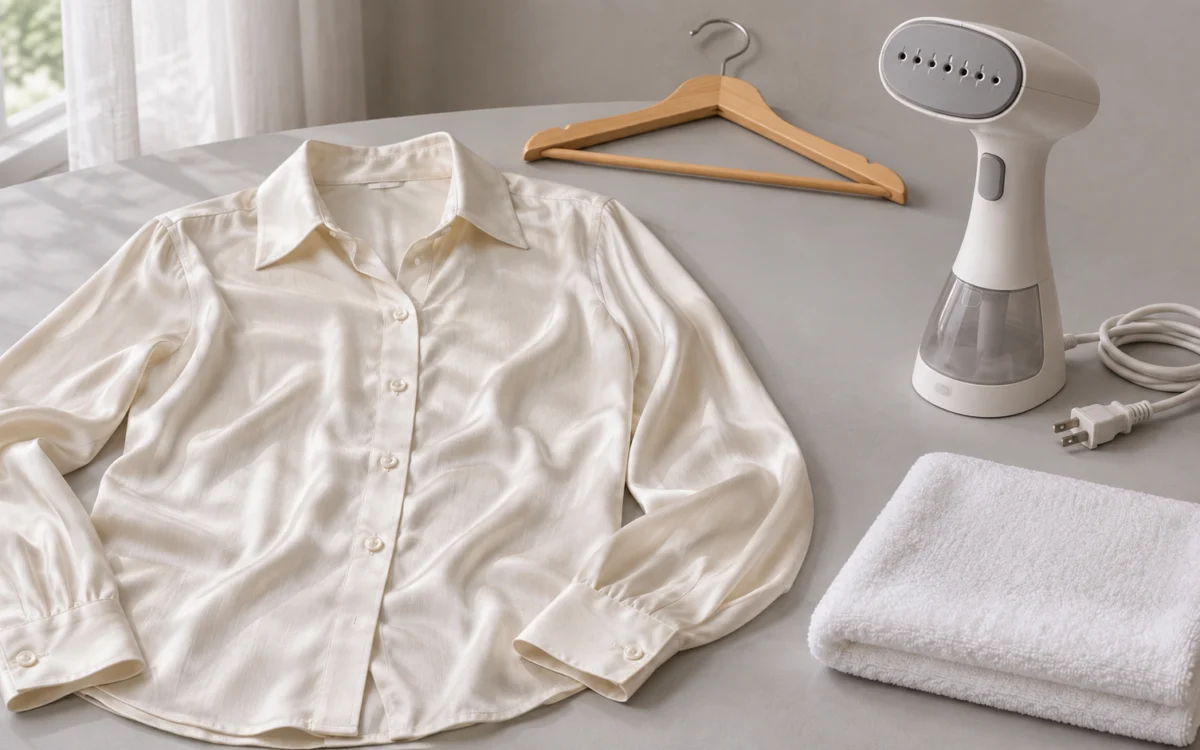
Steaming Silk With 5 Essential Care Checks
You can steam some silk garments, but check the garment’s care instructions and your steamer manual first. If steaming is permitted, begin with a small hidden area and inspect it after it dries. Stop if the fabric develops spots, changes in texture, or distortion.
Steaming silk is not automatically suitable just because a product contains silk. A plain shirt, a lined dress, and an embellished scarf can need different treatment. The garment’s finish, construction, and trims matter alongside its fiber content.
For example, ARKET’s silk care guide allows careful steaming while warning about water spots. That is useful guidance, but it does not replace instructions for a garment made by another brand.
Use the five checks below before treating wrinkles at home.
When Steaming Silk May Be Suitable
| What you find | What it means for your decision | Next step |
| Maker specifically permits steaming | You have garment-specific guidance | Follow it and check a hidden area |
| Instructions say no steam | Steam is not an appropriate workaround | Use only an allowed care method |
| Label says cool iron only | Low ironing heat is not blanket permission to steam | Check the full label or ask the maker |
| Dry clean only with no steaming advice | The cleaning instruction does not resolve every finishing question | Ask the maker or a professional cleaner |
| Label is missing or unreadable | You cannot confirm the intended care method | Seek garment-specific advice |
| Fabric already has stains or damaged areas | Wrinkle removal may not address the actual problem | Get cleaning or repair advice first |
The first decision is whether to proceed. Choosing a gentler-looking setting does not override a restriction on the garment label.
1 Read the Full Garment Care Label
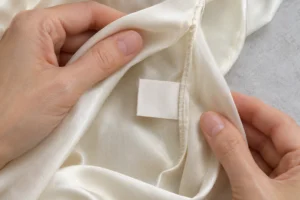
Look for written instructions as well as symbols. Check the main fabric, lining, and attached decorations rather than relying on the word silk in a product title.
If the label is difficult to interpret, use a reliable symbol reference. GINETEX’s care-symbol guide explains that ironing limits should be selected from the care label rather than fiber content alone. It also distinguishes low-temperature instructions and restrictions involving steam.
Do not translate an iron’s temperature marking into a garment-steamer setting. They describe different equipment and are not interchangeable instructions.
A dry-clean-only label is also not a home-steaming recommendation. If the maker gives no finishing guidance, ask before treating an expensive dress, a structured garment, or a piece you cannot replace.
Keep a photograph of the label and the product name when contacting the brand. A specific question is easier to answer than asking whether silk in general can be steamed.
2 Prepare the Garment and the Steamer
Inspect the garment in good light. Identify the wrinkled area, any existing spots, and features you should avoid, such as decorations or a shaped section. Do not use steam to investigate an unknown stain.
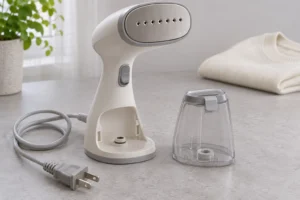
Check the appliance’s instructions for suitable fabrics, water type, attachments, operating position, and maintenance. Use its recommended preparation routine before bringing it near the silk.
A steamer that spits droplets or releases deposits should be dealt with first. Philips’ troubleshooting guidance identifies scale and water additives as possible causes of impurities or staining. Its remedies vary by model, so use the instructions for your appliance.
Do not add perfume, essential oils, or a homemade mixture to the tank unless the manufacturer explicitly permits it. Do not borrow another model’s descaling procedure either.
Arrange a stable place to work and support the garment as its construction allows. Never steam clothing while wearing it, and keep hands out of the steam path. Avoid placing a hand behind thin fabric to flatten a wrinkle.
3 Check a Small Hidden Area First
Choose an inconspicuous section of the actual fabric, such as the reverse of an accessible hem, provided you can reach it without pulling the garment out of shape. A lining is not a substitute for checking the outer silk.
Use the garment’s permitted method and the appliance’s delicate-fabric instructions. Treat only a small area, then let it cool and dry before judging the result.
Compare it with the untreated fabric beside it. Look for a new mark, a changed sheen, puckering, an altered texture, or color movement. Inspect both sides where possible.
A hidden-area check reduces uncertainty; it does not prove that every panel, seam, dye, or trim will respond in the same way. If the result is unclear, stop rather than expanding the treatment.
Avoid treating an entire dress immediately before you need to wear it. Leave time for inspection and for asking a cleaner if the first check raises a concern.
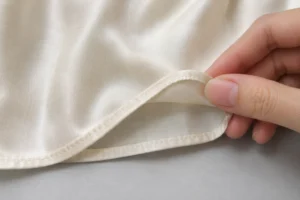
4 Treat the Wrinkles Without Overworking the Fabric
If the instructions permit steaming and the small check shows no visible problem, work gradually on the wrinkled area. Use the steam level and operating position specified for your appliance and fabric.
Do not assume that every steamer head should touch silk. Jiffy Steamer’s FAQ specifically advises against direct head contact with silk. Other equipment may have different instructions, which is why the model’s manual matters.
For a non-contact method permitted by your instructions, maintain the recommended separation and keep the head moving. Do not press the fabric against a hot surface or hold the output over one stubborn crease for an extended period.
Pause to inspect rather than repeatedly passing over a damp patch. If a wrinkle does not relax with the allowed method, more moisture or stronger heat is not automatically the next step.
Work only on accessible fabric. Do not force steam into a structured section or across embellishments because the plain outer fabric responded well. When a seam or shaped area needs pressing, a professional may be the better option.
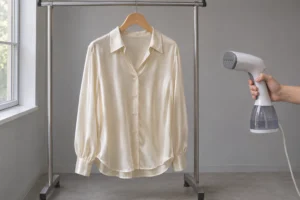
5 Let the Garment Dry and Inspect It Again
Allow the treated section to cool and dry before wearing, folding, or packing the garment. Support it appropriately and avoid handling it more than necessary while damp.
Inspect the finish in good light. Check whether the wrinkle has improved and whether the fabric still looks consistent with surrounding areas. Do not mistake dampness for a finished result.
If a new ring or spot appears, stop. Do not scrub it, spray more water over it, or apply a hot iron as an immediate fix. The right response depends on the garment’s washable or dry-clean-only instructions and the cause of the mark.
Once the garment is ready, store it according to the maker’s guidance. Temporary support during wrinkle removal does not necessarily mean long-term hanging is appropriate for that garment.
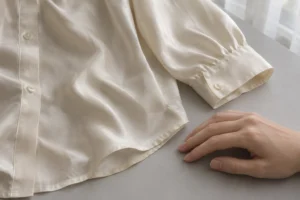
Common Mistakes When Steaming Silk
Treating satin as a fiber label: A shiny satin-looking garment is not necessarily silk. Read its composition and care information rather than judging by appearance.
Using the same routine for every item: A method permitted for a plain shirt does not automatically apply to a beaded dress, a lined jacket, or a garment with pleats.
Chasing a perfect finish: One remaining crease is a reason to reassess. Repeatedly adding steam can create a new problem while you concentrate on the old one.
Trying to clean with steam: This guide concerns wrinkles. Jiffy explicitly notes that its textile steaming process is not a stain-removal treatment. Arrange appropriate cleaning for a dirty garment.
Frequently Asked Questions
Can you steam a silk dress
Sometimes, when the dress’s care guidance permits it. Check the lining, embellishments, and construction as well as the outer fabric. Ask the maker or a professional about a delicate occasion dress if the instructions are incomplete.
Can you steam silk that says dry clean only
Do not treat the cleaning label alone as permission. Look for separate finishing guidance and ask the maker or cleaner when steaming is not addressed.
What temperature should I use for steaming silk
There is no single home setting that applies to every silk garment and appliance. Follow the garment instructions and your model’s guidance. An iron’s soleplate-temperature limit is not a steamer-output setting.
How far should the steamer be from silk
Follow the instructions for the garment and device. Do not copy a distance from a different appliance or assume direct head contact is permitted. If you cannot establish a compatible method, ask before proceeding.
Will steaming silk remove water spots
Do not rely on it for that purpose. Stop when a spot appears and seek care advice based on the garment. More steaming may not resolve the cause.
Is steaming better than ironing silk
It depends on the item and its instructions. Neither method overrides the label. If ironing is permitted, follow the specified heat, moisture, pressing-cloth, and reverse-side guidance rather than adapting this steaming routine.
The useful approach to steaming silk is to confirm permission, prepare the equipment, check a hidden area, and inspect the result before doing more. When instructions conflict or the fabric changes, pause and get garment-specific advice
Contact Us At: TheDailyNewsPoint