
Best pets for apartments depend less on how many square feet you have and more on noise, schedule and your lease. A cat can be perfectly happy in a studio, a high-energy dog can be miserable in a two-bedroom, and a landlord’s pet policy can rule out the animal you wanted before you’ve even met it.
The good news is that plenty of animals do well in small spaces, and a few common sense checks will save you from heartbreak later. Some are easy, some take more work, and a few are better suited to certain lives than others.
This guide covers what to check before you adopt, seven of the best pets for apartments, how to match one to your routine and the habits that keep a small home comfortable for everyone.
What to check before you get any pet
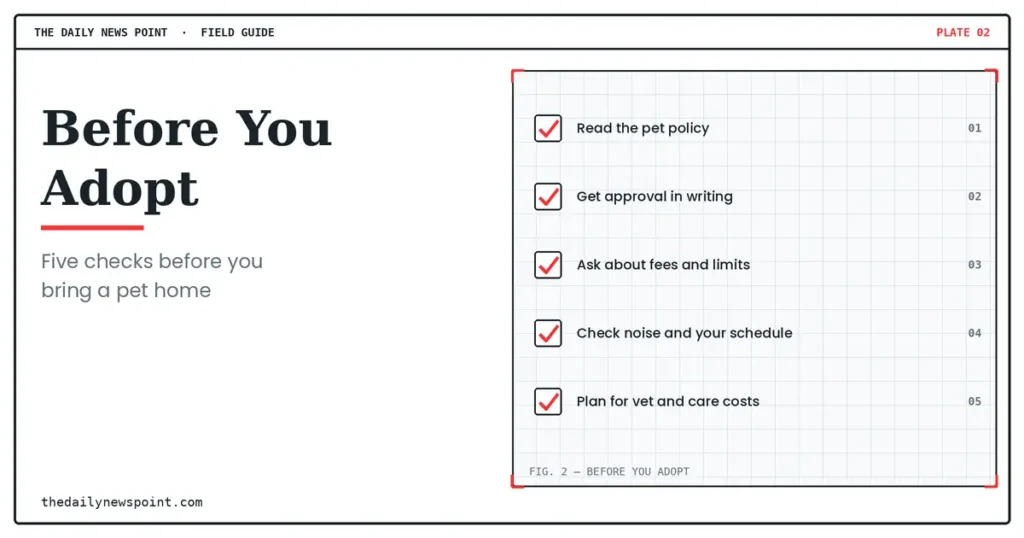
Start with your lease, not your heart. Landlords often limit the type of animal, the number of pets, weight and breed, and they may charge a deposit, a one-time fee or monthly pet rent. The ASPCA’s tips for renters suggest starting your search early and getting everything in writing.
Weight limits and breed rules matter as much as size when you’re comparing the best pets for apartments. Many buildings restrict certain dog breeds, often for insurance reasons. The ASPCA recommends breed-neutral policies that focus on an individual dog’s behavior, so if a restriction affects you, ask the property manager to explain it in writing.
Don’t try to sneak a pet in. Landlords usually find out, and the penalties can include fines or losing your deposit. If your building says no, ask whether there’s any flexibility, and offer references or an extra deposit.
The 7 best pets for apartments
Redfin’s roundup of the best pets for apartments points out that cats and dogs are the most common choices, with lots of small-space alternatives. Here’s how the main options compare.
| Pet | Noise | Space needs | Watch out for |
|---|---|---|---|
| Cat | Low | Small; likes vertical space | Daily play and litter care |
| Small, calm dog | Medium | Needs daily walks | Barking and exercise needs |
| Fish | Very low | A tank and a stable surface | Regular tank upkeep |
| Rabbit | Low | A roomy pen plus floor time | Chewing cords and furniture |
| Guinea pig | Medium | A large enclosure, ideally for two | Clicks and whines, frequent cage cleaning |
| Hamster or gerbil | Low, but active at night | A secure cage | Night noise and odor if not cleaned |
| Gecko or small bird | Low to medium | Habitat with heat or light | Lease limits on birds and reptiles |
1. Cats
Cats are often considered the best pets for apartments. They’re small, relatively quiet, independent and happy to live indoors. Give them a scratching post, window perches or a cat tree, because cats use vertical space, and a litter box you scoop daily.
2. Small or low-energy dogs
Dogs can work, but size alone isn’t the test. Redfin quotes a pet professional who notes that not all small dogs suit apartment living, because every dog has its own personality. What matters is energy level, how much they bark and whether you can walk them several times a day. A few larger breeds known for being calm indoors, like greyhounds, can adapt well to apartments if they get daily exercise.
3. Fish
Fish are some of the most unobtrusive pets. They entertain themselves and don’t make noise. The work is in the tank, with water testing, filter care and regular cleaning, so research the species first.
4. Rabbits
Rabbits are social, affectionate and quiet, but they’re more complicated than cats or dogs. Smaller breeds like the Holland Lop and Netherland Dwarf suit indoor living. They need a roomy pen, daily time out and protection for your cords and furniture.
5. Guinea pigs
Guinea pigs are social and do best in pairs. They communicate in clicks and whines, so they’re not completely silent. They need a large enclosure and frequent cleaning to keep smell down.
6. Hamsters and gerbils
These small rodents are inexpensive, easy to house and fun to watch. Hamsters are nocturnal, so if you’re a light sleeper, don’t keep the cage in your bedroom.
7. Geckos and small birds
Geckos are quiet, and small birds like finches can be good companions, but both need specific lighting or heat, and many leases exclude birds and reptiles. Check the policy before you fall for one.

How to match the pet to your life
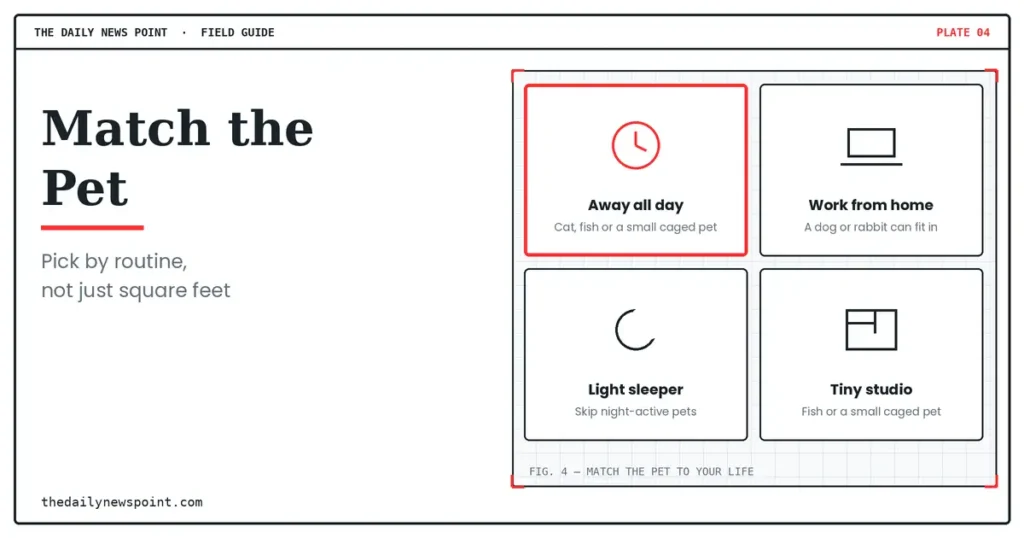
The best pets for apartments are the ones that fit your routine. A few quick rules of thumb help:
- If you’re away most of the day, think cat, fish or a small caged pet. A dog left alone for long hours can get lonely and loud.
- If you work from home, a dog or rabbit can be a great companion because you can fit in walks and playtime.
- If you’re a light sleeper, skip nocturnal pets like hamsters or keep their cage well away from your bed.
- If space is tiny, fish and small caged pets take up the least room.
- If you have allergies, spend time around the animal first, since cats and rabbits can trigger them.
Keeping a pet comfortable in a small space
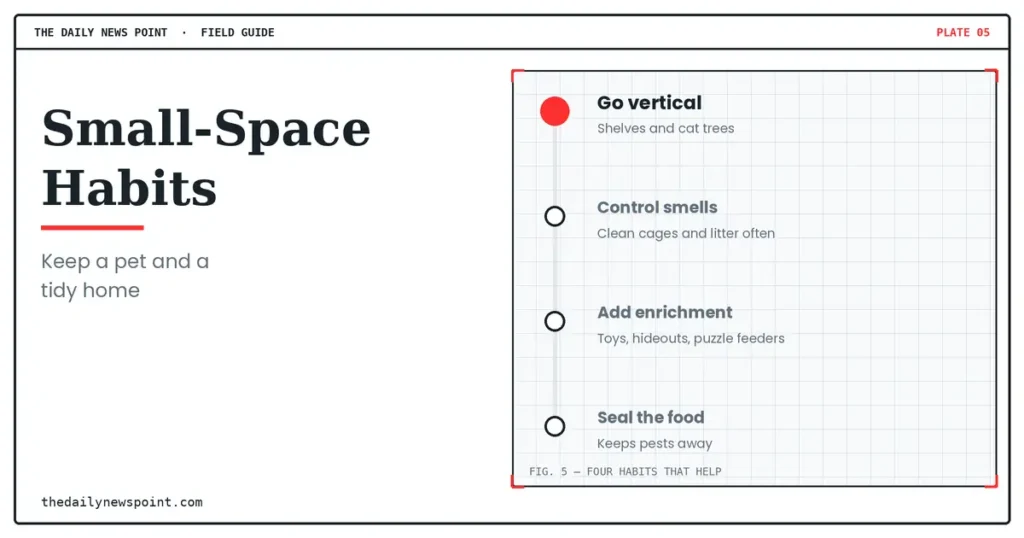
Small homes magnify everything, so good habits matter. Clean cages and litter boxes often, since odor is the number one complaint with caged pets. Go vertical with shelves and cat trees. Give your pet enrichment such as toys, hideouts and puzzle feeders so they aren’t bored.
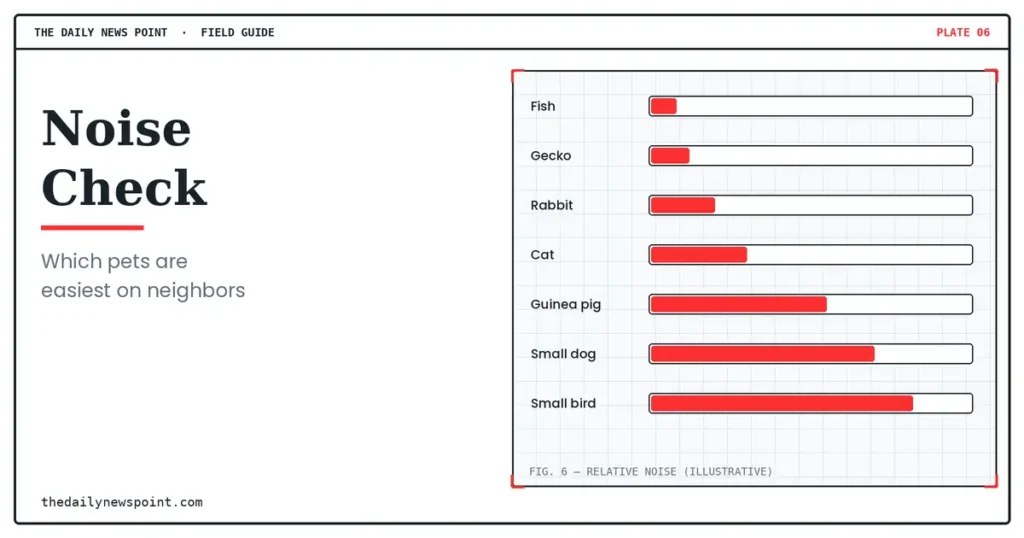
Neighbors notice noise first, so even the best pets for apartments need some manners. Keep dogs on a leash in common areas, use rugs to soften sound and tell nearby neighbors if you’re getting a new dog.
If you’ve got a dog, daily walks do double duty, because they’re exercise for both of you. Our guide to the best exercises for stress relief has ideas for building more movement into your day.
Also keep pet food in sealed containers and clean up spills, which cuts down on pests. If you ever see large, winged roaches near the kitchen, our guide to flying roaches explains how to keep them out.
What a pet really costs in an apartment
Even the best pets for apartments come with ongoing costs. Budget for more than the animal itself. Beyond the adoption fee, think about pet deposits, monthly pet rent, food, supplies, vet care and renters insurance, which some landlords like to see. The ASPCA notes that pet deposits and rent can be a major barrier for renters, so ask about them up front.
Common mistakes with the best pets for apartments
- Choosing by size alone. A tiny dog with lots of energy can be louder than a calm large one.
- Skipping the lease. Always read the pet policy and get approval in writing.
- Ignoring noise. Barking, wheels and chirping carry through walls.
- Underestimating care. Fish tanks and rabbit pens are more work than they look.
- Buying an exotic pet on impulse. Local laws and lease rules may not allow it.
Quick answers about the best pets for apartments
What are the best pets for apartments for beginners? Fish, a cat or a pair of guinea pigs are common starting points. Each still needs research before you commit.
What’s the best pet for a small studio? Fish, a hamster or a cat tend to take up the least room. Which fits best depends on your schedule and your lease.
What’s the quietest apartment pet? Fish and geckos are generally quietest, followed by cats and rabbits.
Are dogs okay in apartments? Yes, if you can meet their exercise needs and they’re comfortable alone for your work hours.
Can a landlord say no to any pet? Usually yes, but assistance and emotional support animals are protected by fair housing laws.
The bottom line on the best pets for apartments
Pick the animal that fits your routine, your budget and your lease, not just your floor plan. Check the pet policy first, get approval in writing and plan for noise, cleaning and daily care. For more everyday guides, browse the Learning section of The Daily News Point, and read Redfin’s tips on renting with pets before you sign.
This article offers general information. Check your lease and local laws, and talk to a veterinarian about the care any pet needs.
Read More At: TheDailyNewsPoint
Contact Us At: TheDailyNewsPoint