
What is a hip dip? It’s the gentle inward curve some people have on the sides of their body, just below the hip bone and above the upper thigh. You might also hear it called “violin hips,” because the shape can resemble the curve of a violin. It’s incredibly common, completely normal and, despite what social media says, nothing that needs fixing.
The term exploded online in recent years, and with it came a wave of “fix your hip dips” workouts, shapewear and even cosmetic procedures. That’s a lot of attention for something that’s decided mostly by the shape of your skeleton.
This guide explains what is a hip dip, what causes it, why it went viral, whether exercise can change it, how to style it if you like and when something is worth asking a doctor about.
What is a hip dip?
A hip dip is an indentation along the side of your hips, where your hip meets your outer thigh. Instead of a smooth line from waist to thigh, the outline curves inward before it flares back out. Anatomists sometimes call it a trochanteric depression, after the bony bump involved.
Cleveland Clinic points out that “hip dip” isn’t a medical term at all. It’s a phrase that grew up on social media, and it describes a variation in body shape, like height or the width of your shoulders. You can read its explainer on hip dips for the medical view.
What causes a hip dip?
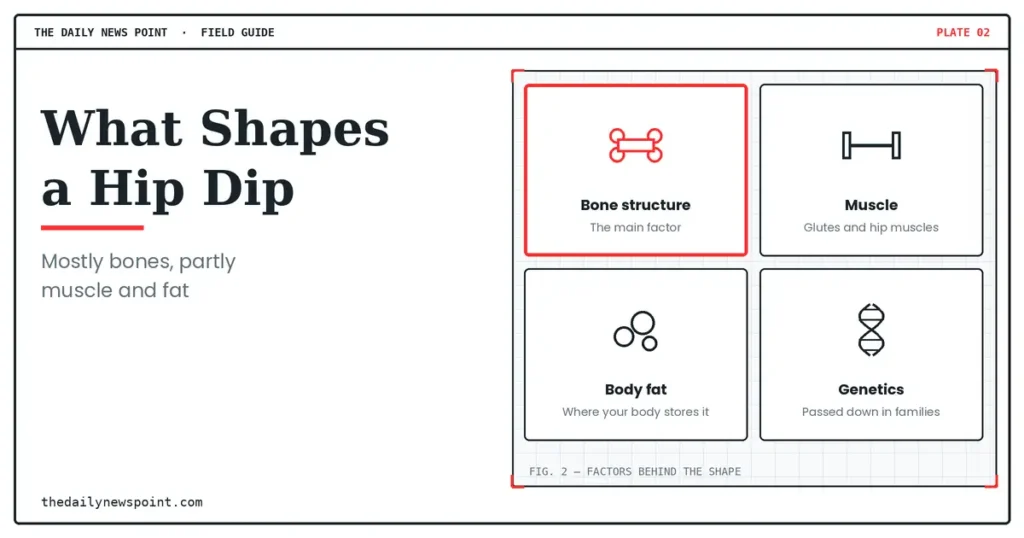
The short answer is bone structure. Just above the dip is the iliac crest, the curved top edge of your pelvis, which you can feel when you rest your hands on your waist. Just below it is the greater trochanter, the bony knob at the top of your thigh bone. In between, there’s soft tissue, and the skin there sits closer to bone than it does elsewhere. That’s the dip.
- The width and shape of your pelvis. A wider or differently angled pelvis changes the outline.
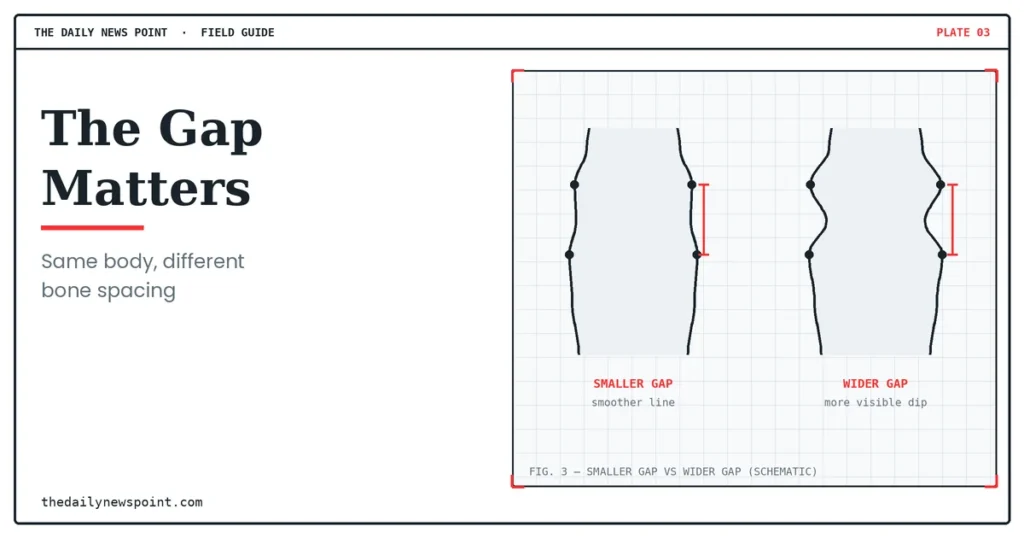
- The size and position of your greater trochanter. A larger or more prominent bump below can make the gap above it look deeper.
- The length of your femoral neck. This is the short stretch of bone connecting your hip joint to the rest of the thigh bone.
- Muscle and body fat. These are secondary factors. They can fill the area in or leave it more defined, but they don’t change the bone underneath.
Because your skeleton comes from your genes, two people with the same weight and workout routine can have very different hip lines. Understanding what is a hip dip starts with knowing it’s about structure, not effort.
Why did hip dips go viral?
People keep asking what is a hip dip because filtered, posed photos often show a smooth line from waist to thigh, and real bodies rarely match it. Experts quoted by TODAY.com have been blunt that hips with dips are simply regular hips, and that the idea of an ideal hip shape is more trend than anatomy.
Myths and facts about hip dips
| The myth | What’s true |
|---|---|
| A hip dip means you are overweight or unfit | No. It says nothing about fitness, weight or health. |
| It comes from not working out | No. It comes mostly from your bone structure. |
| The right workout will erase it | No. Exercise can’t change bone, though it can build muscle. |
| Only women have hip dips | No. Anyone can, though pelvis shape makes them more common in women. |
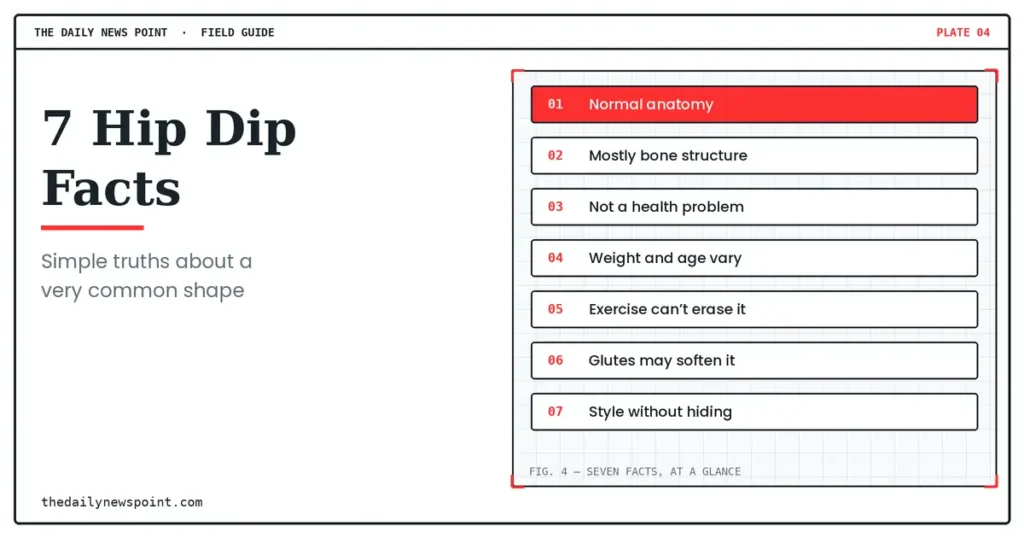
7 things to know if you’re wondering what is a hip dip
1. It’s normal anatomy
If you’re still wondering what is a hip dip, GoodRx describes it as a normal and natural part of the human body. Its overview of getting rid of hip dips adds the medical perspective.
2. Bone structure is the main driver
The width of your hips, the size of your greater trochanter and the length of your femoral neck do most of the work. You can’t change your bones with exercise or diet.
3. It’s not a sign of poor health
Hip dips don’t mean you’re overweight, unfit or lacking in anything. The only health angle experts mention is range of motion, and it’s unlikely to be an issue.
4. Weight and age change things differently for everyone
Some people find their hip dips look more pronounced as they lose fat, while others notice the opposite.
5. Exercise can’t erase it
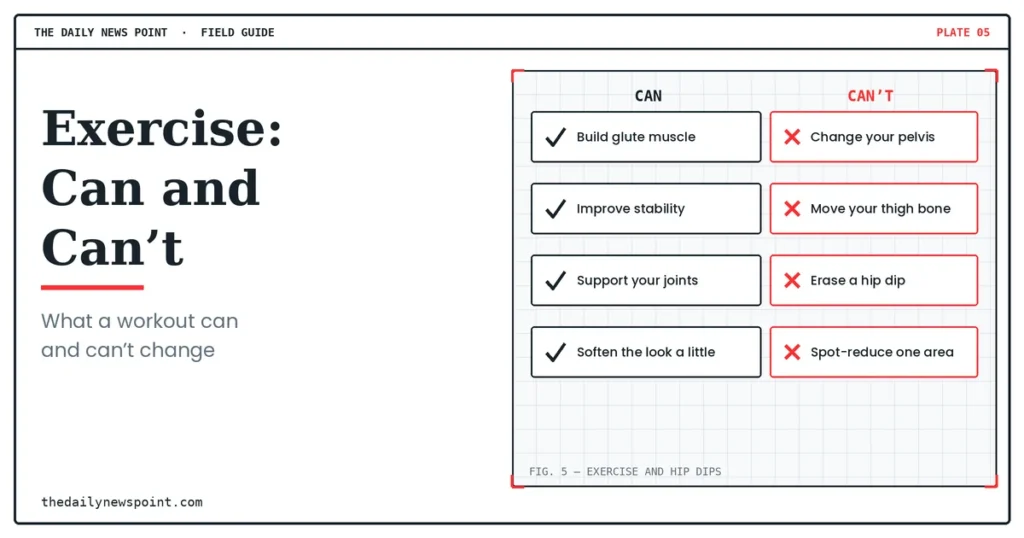
Exercise can’t change the shape of your pelvis or the position of your thigh bone, so you can’t get rid of a hip dip completely. Be wary of any program that says otherwise.
6. Strong glutes may soften the look
Building the muscles around your hips can fill in the area a little and make the curve less noticeable. Results vary a lot, and studies on this are limited.
7. Clothes can flatter without hiding
You never have to cover up a hip dip, but the right fit can make an outfit feel more comfortable. More on that below.
Can exercise get rid of a hip dip?
Not completely. Healthline’s guide to hip dips and exercises says that glute and hip exercises may help build the muscle around the area, possibly changing how it looks, but that no exercise, diet or lifestyle habit can alter the shape of your skeleton. That’s the honest ceiling.
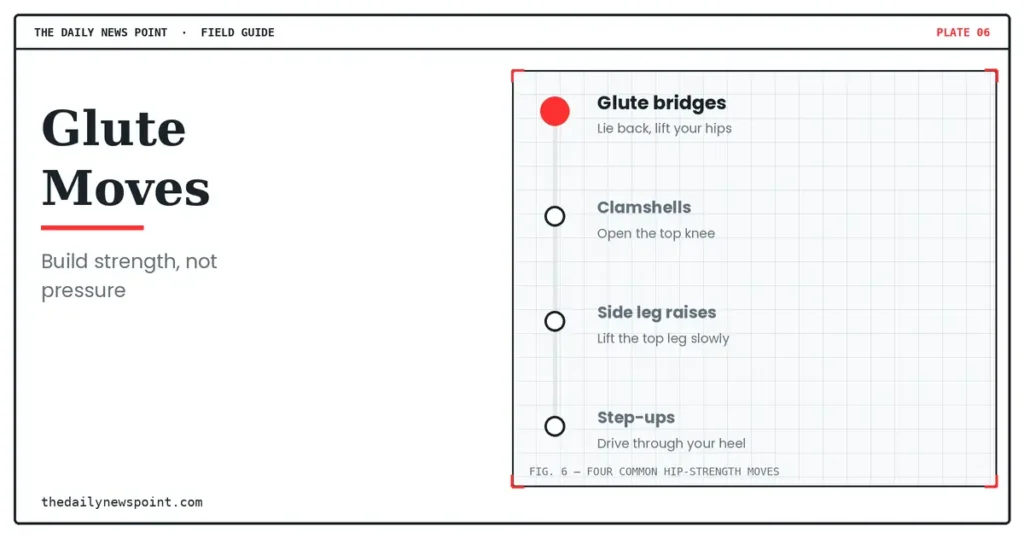
Trainers disagree about which muscles to focus on. Some target the gluteus medius on the side of the hip, while others focus on the larger gluteus maximus for overall glute development. Either way, the goal is strength, not erasing a shape that’s normal. If you’d rather move because it feels good, our guide to the best exercises for stress relief has options that don’t depend on how your body looks. Moves people commonly use for hip strength include:
- Glute bridges. Lie on your back, feet flat, and lift your hips by squeezing your glutes.
- Clamshells. Lie on your side with knees bent and open your top knee like a clamshell.
- Side leg raises. Lie on your side and lift your top leg slowly.
- Step-ups. Step onto a sturdy bench, driving through your heel.
Start gently, focus on form and check with a doctor if you have an injury or a health condition.
Clothes that work with a hip dip
Still asking what is a hip dip and how to dress for one? Fit matters more than any rule. High-waisted pants and skirts in fabrics with some structure tend to skim the area smoothly, while stretchy, clingy fabrics follow every curve. Darker colors, ruching and A-line cuts are other popular choices. If you like the way something fits, that’s all that matters.
Length and fit also change how a top sits over your hips, which is why our guide on how to choose a tank top for your body type is worth a look. Many of its tips on hem length and fit apply here too.
Cosmetic options and what to know
Once people understand what is a hip dip, some look at cosmetic procedures to fill it in, such as fat grafting, fillers or implants. These are medical decisions with real risks and costs, and results aren’t guaranteed. If you’re curious, talk with a qualified, board-certified provider, and be wary of anyone promising to erase hip dips without surgery.
When to see a doctor
You don’t need a medical check for a normal hip dip. See a healthcare professional if you notice new or severe hip pain, swelling, redness or warmth over the hip bone, or difficulty walking or bearing weight.
Common mistakes when you’re asking what is a hip dip
- Comparing yourself to edited photos. Filters and posing smooth lines that real bodies don’t have.
- Chasing spot-reduction. You can’t exercise one area into a different bone shape.
- Buying quick fixes. Pads, wraps and miracle programs rarely deliver what they promise.
Quick answers about what is a hip dip
Are hip dips bad? No. They’re a normal body shape and not a flaw or a health issue.
Can you get rid of hip dips? You can’t remove them, because they come from bone structure. You can strengthen the muscles around them if you like.
Do men have hip dips too? Yes. Anyone can have them, though they’re discussed more in relation to women’s bodies.
The bottom line on what is a hip dip
So, what is a hip dip? It’s a natural inward curve shaped mostly by your bones, found on plenty of healthy bodies and perfectly fine just the way it is. Strengthen your muscles if it feels good, wear what you love and don’t let a trend convince you there’s anything to fix. For more style reads, browse the Fashion section of The Daily News Point.
This article offers general information and isn’t medical advice. Talk with a healthcare professional about hip pain or before starting a new exercise plan.
Read More At: TheDailyNewsPoint
Contact Us At: TheDailyNewsPoint