

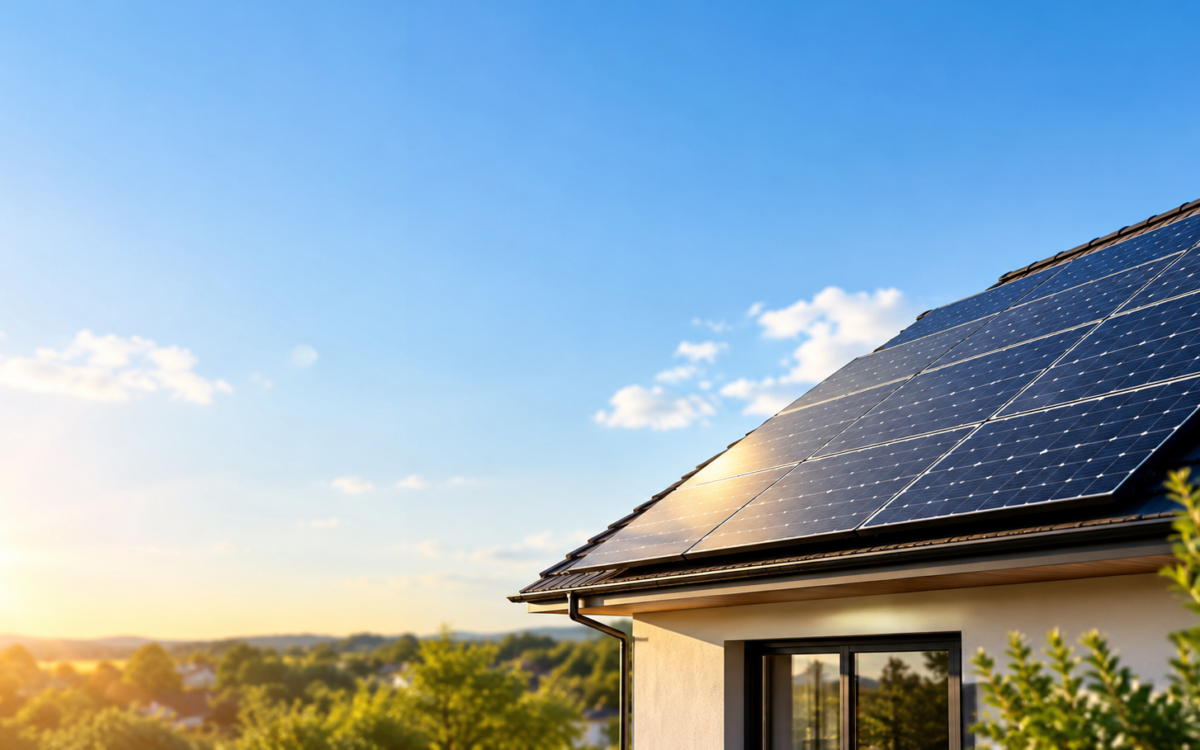
Solar panels are far better than they used to be, but “efficiency” is one of the most misunderstood numbers on a spec sheet. So how efficient are solar panels today? Most modern residential panels convert roughly 20% to 24% of the sunlight that hits them into electricity, and the best commercial panels in 2026 have reached about 25%. Older panels from a decade or so ago often sat closer to 15% to 17%.
This guide explains what efficiency really means, how it differs by panel type, which factors cut your real-world output, and whether paying extra for a higher number is worth it.
What Does Solar Panel Efficiency Mean?
Solar panel efficiency is the share of incoming sunlight that a panel turns into usable electricity. A panel rated at 22% efficiency converts about 22 watts of electricity for every 100 watts of sunlight landing on its surface.
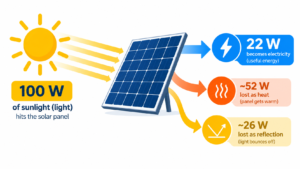
Here is a simple example. Under standard test conditions, sunlight delivers about 1,000 watts per square metre. A panel covering 1.7 square metres at 22% efficiency produces roughly 370 watts (1.7 x 1,000 x 0.22). A less efficient panel of the same size, say 18%, would produce about 306 watts.
The remaining sunlight is not wasted in a way that harms anything. It is reflected, converted to heat, or simply cannot be captured by the materials used in the cell.
Cell efficiency vs panel efficiency
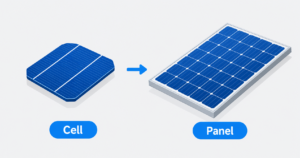
There are two numbers you will see quoted, and they are not the same. Cell efficiency measures the individual solar cell. Panel (module) efficiency measures the finished product, which includes the frame, gaps between cells and other areas that do not generate power. Panel efficiency is always lower than cell efficiency. When you compare products for a real project, use the module figure.
Average Solar Panel Efficiency in 2026
Efficiency has climbed steadily. According to SEIA market data, average efficiency of residential panels in the United States rose from about 14.6% in 2010 to about 21.4% in 2024. That is an improvement of nearly 50% in around 14 years.
Today, nearly every mainstream commercial panel claims more than 20%. Most manufacturers have also shifted to n-type cell designs, which tend to perform more reliably over time than older p-type designs.
Efficiency by Solar Panel Type
The technology inside the panel is the biggest factor in its efficiency. The ranges below are typical figures for panels you can actually buy.
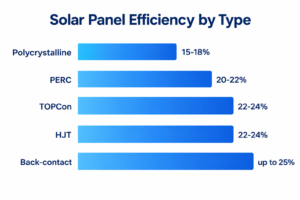
| Panel type | Typical efficiency | Notes |
|---|---|---|
| Polycrystalline (older silicon) | about 15% to 18% | Cheaper, but being phased out in many markets |
| Monocrystalline PERC | about 20% to 22% | Long the mainstream standard |
| TOPCon (n-type) | about 22% to 24% | Rapidly becoming the new mainstream; top commercial modules reach about 24.1% |
| Heterojunction (HJT) | about 22% to 24% | Strong power output and good performance in heat |
| Back-contact (IBC) | up to about 25% | Currently the most efficient commercial panels, from makers such as AIKO and LONGi |
| Thin-film | roughly 12% to 19% | Lower efficiency, but useful for large flat installations and some conditions |
Exact numbers vary by model, so always check the manufacturer’s datasheet.
The Most Efficient Solar Panels in 2026
The big milestone this year is that 25% efficiency has arrived in commercially available panels. Back-contact modules from AIKO and LONGi both reached that level in April 2026. In the TOPCon category, JA Solar leads at around 24.1%, while HJT modules from makers such as Risen Energy compete on total power output, with some reaching 740 watts per panel.
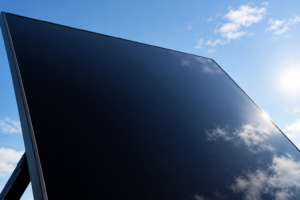
Back-contact panels also tend to look cleaner because the electrical contacts sit on the rear of the cell, leaving the front free of metal lines. They usually cost more, which leads to the question of whether the premium is worthwhile (covered below).
What About Lab Records?
You may see headlines about solar cells reaching 30% or even 35% efficiency. These are real, but they are laboratory results, not products on sale.
For independently confirmed records across every solar technology, see the NREL Best Research-Cell Efficiency Chart.
- In February 2026, LONGi reported a 35.0% efficiency record for a perovskite-silicon tandem cell, the best result for any two-layer solar technology.
- LONGi also set a 28.13% record for a silicon-only solar cell in April 2026.
- Oxford PV holds a record for commercial-sized perovskite-on-silicon tandem panels at roughly 27%.
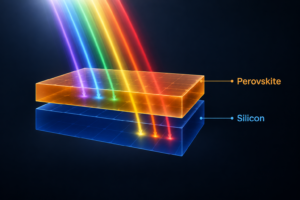
Perovskite tandem technology works by stacking two materials that each capture a different part of the sunlight spectrum, which allows it to go beyond the practical limit of silicon alone (around 29% for a single silicon layer). The main hurdles are no longer efficiency itself, but long-term durability, manufacturing yield and meeting industry certifications. Expect tandem panels to reach homes gradually over the coming years rather than overnight.
Why Your Real-World Efficiency Is Lower Than the Label
The efficiency on a datasheet is measured under standard test conditions in a lab: a fixed temperature of 25 degrees Celsius and a fixed amount of light. Real roofs are rarely that perfect. Several things reduce what you actually get.
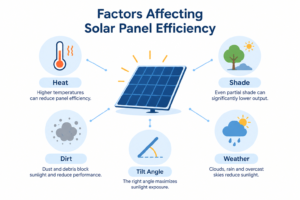 Heat. Solar panels lose a little output as they get hotter. Most panels lose roughly 0.3% to 0.4% of their power for every degree Celsius above 25. On a very hot day, panel surface temperatures can be far above that, so output dips. Look for a low temperature coefficient on the datasheet if you live somewhere hot.
Shade. Even partial shade on one part of a panel can cut output noticeably for that panel or string. Optimisers or microinverters can reduce this problem.
Dirt and dust. A layer of dust, pollen or bird droppings blocks light. Regular cleaning, especially in dry and dusty regions, helps keep output up.
Angle and direction. Panels perform best when tilted and oriented to match your latitude and the path of the sun. Poor angles waste potential.
Cloudy weather. Panels still generate electricity under cloud, but at reduced levels, often a fraction of their sunny-day output.
Age (degradation). All panels lose a small amount of output each year. Good modern panels degrade around 0.4% to 0.5% per year, and many come with 25-year performance warranties guaranteeing a large share of original output. Higher-quality n-type panels tend to degrade more slowly.
System losses. Wiring, inverters and other equipment also lose a few percent of energy before it reaches your home.
Does Higher Efficiency Matter?
It depends on your situation.
It matters a lot when roof space is limited. A higher-efficiency panel produces more power per square metre, so you can install a larger system in a small area.
It matters less when you have plenty of space. If your roof or land is large, you can simply add more lower-cost panels to reach the same output, often for a lower total price.
What really counts is the cost per watt and the total energy produced over the system’s life, not the efficiency number alone. A slightly less efficient panel with a better warranty, lower degradation and a lower price can be the smarter buy. Always compare efficiency alongside price, warranty, temperature coefficient and the manufacturer’s reputation.
Bifacial Panels: A Different Kind of Gain
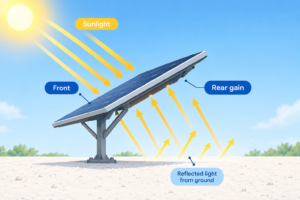
Bifacial panels collect light on both the front and the back. On reflective surfaces such as light-coloured roofs, white gravel or snow, they can add roughly 5% to 20% extra energy. Their headline efficiency number only describes the front side, so total yield can exceed what the label suggests.
How to Get the Most From Your Solar Panels
- Choose panels with a strong warranty and low degradation rate, not just a high efficiency percentage.
- Check the temperature coefficient if you live in a hot climate.
- Have the system designed for the right tilt and direction.
- Avoid shade, or use optimisers or microinverters where shade is unavoidable.
- Clean panels regularly, particularly in dusty areas.
- Monitor production so you can spot problems early.
Frequently Asked Questions
What is a good efficiency for a solar panel?
In 2026, anything above about 20% is considered good, and 22% to 24% is excellent. The very best commercial panels reach around 25%.
What is the average solar panel efficiency?
Most modern residential panels fall between roughly 20% and 24%. The US residential average was about 21.4% in 2024.
What is the most efficient solar panel you can buy?
Back-contact panels from manufacturers such as AIKO and LONGi, which reached about 25% commercial efficiency in 2026.
Do solar panels lose efficiency over time?
Yes, but slowly. Typical degradation is around 0.4% to 0.5% per year, and most manufacturers guarantee a high share of original output after 25 years.
Do solar panels work in cloudy weather?
Yes. Output drops compared with bright sunshine, but panels still produce electricity on overcast days.
Does heat reduce solar panel efficiency?
Yes. Output falls slightly as temperature rises above 25 degrees Celsius, which is why the temperature coefficient matters in hot regions.
Are 25% efficient panels worth the extra cost?
They are worth it mainly when roof space is limited. If you have plenty of room, a cheaper panel with good warranty terms may give better value.
Will solar panels get much more efficient soon?
Lab results already exceed 30%, and perovskite tandem panels are heading toward wider commercial use. However, mass-market adoption depends on durability and manufacturing scale, so improvements will likely be gradual.
Final Thoughts
So, how efficient are solar panels? Most good panels today turn about 20% to 24% of sunlight into electricity, with the leading models reaching 25%. That is a big leap from a decade ago, and lab breakthroughs suggest more gains are coming.
But efficiency is only one piece of the puzzle. For the best return on your investment, weigh it alongside price, durability, warranty, climate and the space you have available.
Contact Us At: TheDailyNewsPoint
Write For Us: TheDailyNewsPoint
