

Best exercises for stress relief don’t have to be intense, expensive or even sweaty. A brisk walk, a yoga flow or a few songs you can dance to can all take the edge off a hard day. The trick is picking something your body enjoys and doing it often enough that it becomes a habit.
Stress is part of life, but when it sits in your shoulders for weeks it starts to wear you down. Exercise is one of the few tools that works on the mind and the body at the same time. It burns off that wound-up energy, gives your brain something else to focus on and often helps you sleep better too.
In this guide you’ll find the best exercises for stress relief, how they work, how much you need and a simple 10-minute routine you can try today.
How exercise helps with stress
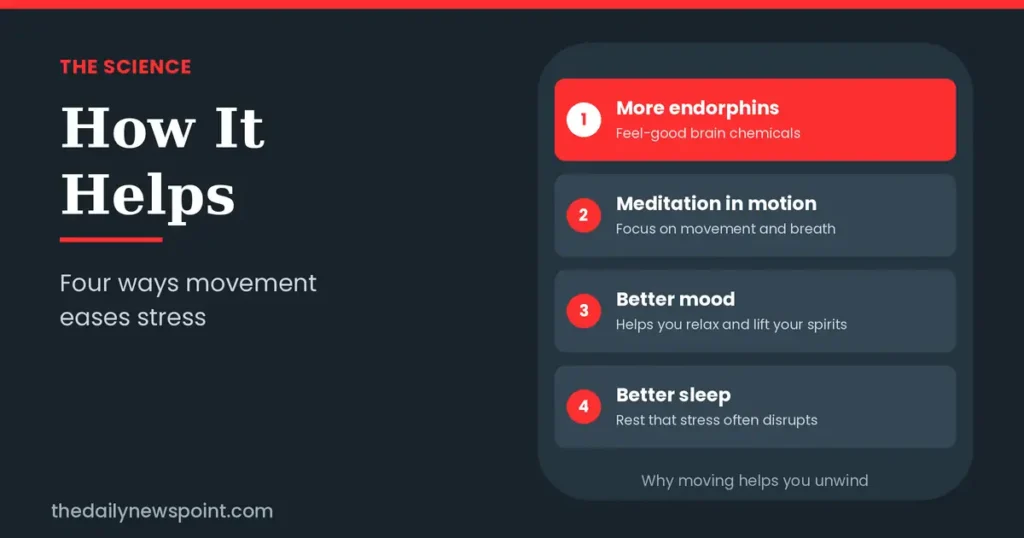
Start with the brain chemistry. Mayo Clinic explains that physical activity can boost endorphins, the brain’s feel-good chemicals. You may have heard of the “runner’s high,” but it isn’t reserved for runners. Any aerobic activity, from a game of tennis to a hike in the woods, can bring on the same kind of lift.
Then there’s what Mayo Clinic calls meditation in motion. After a long walk or a few laps in the pool you’ve probably noticed that the day’s irritations have faded. You were paying attention to your breathing and your movement, and your mind got a break from the loop it was stuck in.
Regular exercise can also lift your mood, help you relax and improve the sleep that stress tends to wreck. You can read the full overview in Mayo Clinic’s article on exercise and stress. It’s also why the best exercises for stress relief are usually the ones that get you breathing steadily and thinking about something other than your inbox.
The 7 best exercises for stress relief
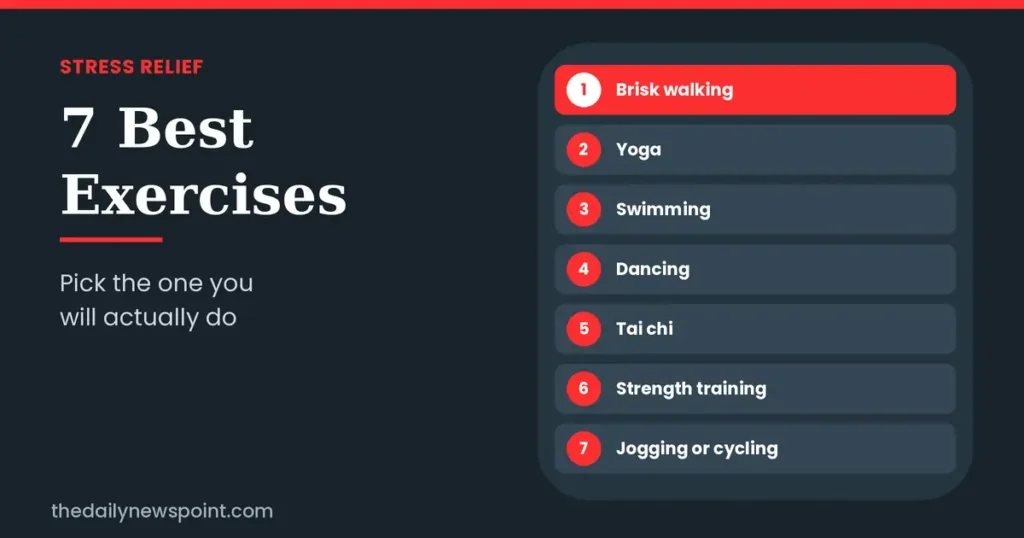
There’s no single winner here. Mayo Clinic says almost any form of exercise can act as a stress reliever, and the most important thing is to choose something you enjoy. These seven are some of the best exercises for stress relief because they’re easy to start and easy to keep up.
1. Brisk walking
Walking is the easiest place to begin. You don’t need gear, a gym or a plan. Mayo Clinic suggests setting a specific goal, like walking during your lunch hour three times a week. Try leaving your phone in your pocket for the first ten minutes and let your mind wander.
2. Yoga
Slow movement and steady breathing make yoga a natural fit when you feel wound tight. It also stretches the places stress likes to hide, like the neck, shoulders and hips. If you’re usually a hard-charging exerciser, a gentle class is a good change of pace.
3. Swimming
Swimming asks you to breathe in rhythm, and the world gets quiet once your ears are under the surface. A few easy laps can feel like a reset. It’s also kind to your joints, which helps if high-impact workouts leave you sore.
4. Dancing
Put on a playlist in the kitchen and move. Nobody’s judging your technique. Music plus movement is hard to beat for shaking off a bad mood, and it counts as real exercise even when it feels like play.
5. Tai chi
Tai chi is slow, flowing and built around the breath, which makes it close to a literal meditation in motion. It’s gentle enough for almost anyone to try and a good option if regular workouts feel intimidating.
6. Strength training
Lifting weights or doing body-weight moves like squats and push-ups gives frustration somewhere to go. It also fits the general advice to work all the major muscle groups at least twice a week. Keep the weights manageable and focus on good form.
7. Jogging or cycling
Steady jogging or cycling is the classic route to that endorphin lift. The advice from Mayo Clinic is to walk before you run and build up gradually, because excitement about a new plan can lead to overdoing it. Keep the pace easy enough that you could chat.
How much exercise do you need for stress relief?
For most healthy adults, Mayo Clinic points to at least 150 minutes of moderate aerobic activity or 75 minutes of vigorous activity a week, plus strength training for the major muscle groups at least twice a week. That’s a general health target, though, not a magic stress threshold. Mayo Clinic also says even short bursts of activity can help, so ten minutes still counts.
A simple way to start: pick two or three activities from the list, put them in your calendar like appointments and keep the first few weeks easy. You’re building a habit, not training for a race.
A 10-minute routine using the best exercises for stress relief
No time for a full workout? Try this short version of the best exercises for stress relief on a rough afternoon. You can do it indoors in regular clothes.
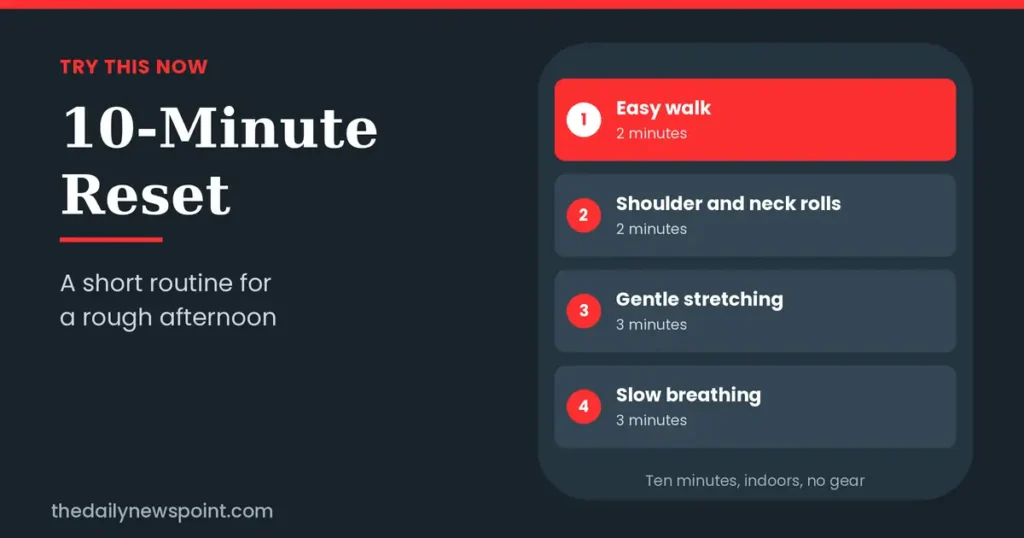
- Easy walk (2 minutes). Around the room, down the hall or outside. Relax your jaw and let your arms swing.
- Shoulder and neck rolls (2 minutes). Roll your shoulders back slowly, then gently tilt your head from side to side. Keep it slow and comfortable.
- Gentle stretching (3 minutes). A relaxed forward fold, a reach to each side and a few easy chest openers. Stop if anything hurts.
- Slow breathing (3 minutes). Breathe in through your nose, then out slowly, a little longer than the breath in.
Choosing the best exercises for stress relief for you
The right pick depends on how you feel and what you’ll actually stick with. A few rules of thumb:
- If you feel wired, something brisk like a fast walk, a ride or a strength session can burn off the extra energy.
- If you feel drained, go gentler. Yoga, tai chi or an easy walk can still help without taking more out of you.
- If you feel scattered, choose something with a rhythm, like swimming or dancing, so your attention has an anchor.
Whichever you choose, treat it as time for yourself, not another item on the to-do list. Mayo Clinic makes the same point.
Safety first
If you haven’t exercised in a while or you have health concerns, Mayo Clinic recommends talking with a healthcare professional before starting a new plan. Start slowly, build up gradually and stop if you feel pain, dizziness or chest discomfort.
Common mistakes with the best exercises for stress relief
- Going too hard too soon. An exhausting workout can leave you more drained, not less stressed.
- Making it one more chore. If you dread it, you’ll skip it. Swap in something you like.
- Waiting for the perfect time. Ten imperfect minutes beat a perfect workout that never happens.
- Quitting after a week. The mood benefits tend to build with regular activity, so give it a fair run.
Quick answers about the best exercises for stress relief
What is the single best exercise for stress relief? Whichever one you’ll actually do. Walking, yoga and swimming are popular starting points because they’re easy to begin.
Can a short workout help? Yes. Even brief bouts of activity can help, according to Mayo Clinic.
How long until I feel calmer? Some people feel better right after a session. Longer-term benefits usually come with regular activity over several weeks.
What if my stress doesn’t ease? If stress or anxiety feels overwhelming or keeps going, talk with a doctor or mental health professional. Exercise helps, but it isn’t a replacement for support.
The bottom line on the best exercises for stress relief
You don’t need a gym membership or a perfect routine. Pick a movement you enjoy, start small and repeat it until it feels normal. That is really all the best exercises for stress relief ask of you. Your shoulders will probably thank you first.
This article offers general wellness information and isn’t medical advice. Talk with a healthcare professional before starting a new exercise plan.
Read More At: TheDailyNewsPoint
Contact Us At: TheDailyNewsPoint

[…] and How to Enjoy ThemBest Mosquito and Insect Repellent: 7 Amazing Options and How to Use ThemBest Exercises for Stress Relief: 7 Amazing Ways to Calm Your Mind and BodyBirth Month Flower for December: 3 Beautiful Blooms and What They MeanWhat Do Dove Birds Symbolize? […]
[…] Facts and What to DoBest Mosquito and Insect Repellent: 7 Amazing Options and How to Use ThemBest Exercises for Stress Relief: 7 Amazing Ways to Calm Your Mind and BodyBirth Month Flower for December: 3 Beautiful Blooms and What They MeanWhat Do Dove Birds Symbolize? […]