
Best mosquito and insect repellent is a bigger question than it sounds, because the answer depends on who’s using it, where they’re going and what’s biting. A spray that works for a backyard barbecue may not be the right pick for a hike in tick country, and the label that’s safe for you might not be right for a toddler.
The good news is that you don’t need to sort through hundreds of products. Public health agencies have already narrowed the field to a short list of proven ingredients. Once you know that list, choosing gets a lot easier.
This guide explains how to spot the best mosquito and insect repellent, compares the main ingredients, covers how to apply it safely and answers the questions people ask most.
What makes the best mosquito and insect repellent?
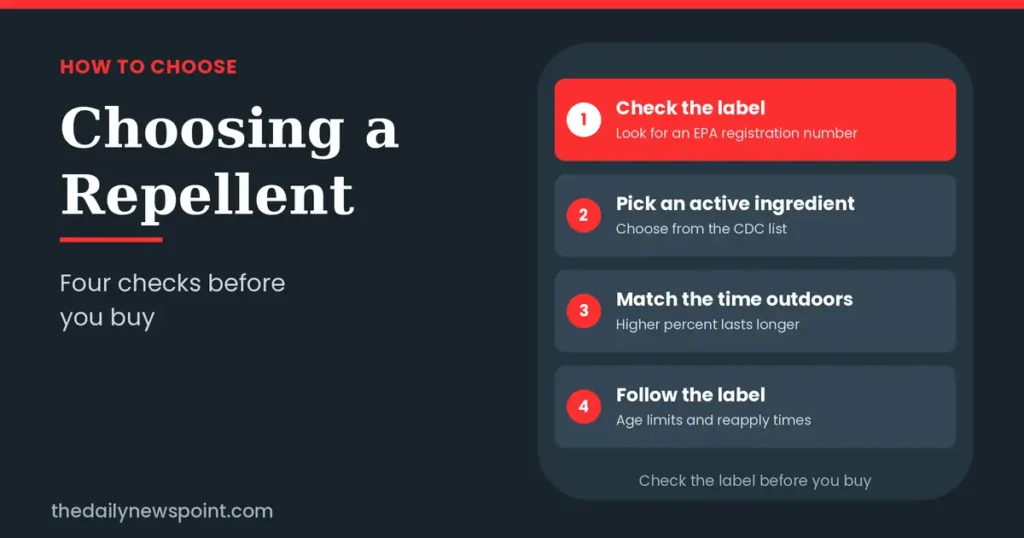
Start with the label. The CDC recommends repellents registered with the Environmental Protection Agency (EPA) that contain one of a short list of active ingredients: DEET, picaridin, IR3535, oil of lemon eucalyptus (OLE), para-menthane-diol (PMD) or 2-undecanone. When used as directed, the CDC says EPA-registered repellents are proven safe and effective, even for pregnant and breastfeeding women.
Look for an EPA registration number on the label. It means the company gave the EPA technical information about how well the product works. The EPA also runs a search tool that lets you filter by ingredient and length of protection.
One more thing to know: higher percentages of an active ingredient give you longer protection, not stronger protection. So the best mosquito and insect repellent for a two-hour walk is not necessarily the same product you’d want for a full day outdoors.
The 7 best mosquito and insect repellent options
None of these is a magic shield, and none is right for everyone. Think of this as a menu, then match it to your situation.
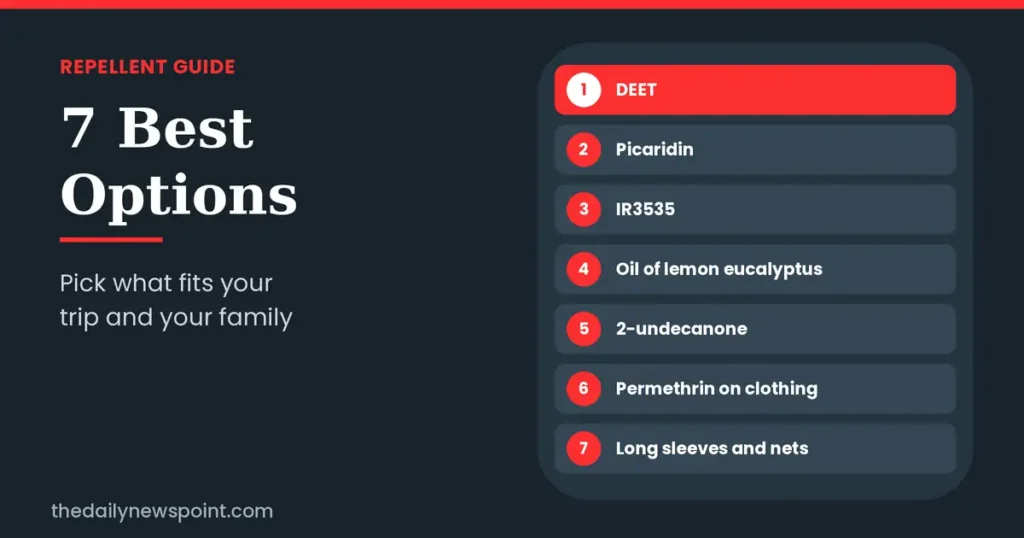
1. DEET
DEET is the long-standing standard and the ingredient with the longest track record. The American Academy of Pediatrics recommends products with no more than 30% DEET for children older than two months. Like some other repellents, DEET can damage certain plastics and fabrics, so keep it off glasses frames and gear.
2. Picaridin
Picaridin is called icaridin outside the United States. Many people find it lighter on the skin than DEET. The American Academy of Pediatrics recommends products with up to 10% picaridin for children.
3. IR3535
IR3535 can work well at concentrations of 10% or more and repels mosquitoes and ticks. It can irritate the eyes and damage some clothing and plastics, so apply it with care around your face.
4. Oil of lemon eucalyptus (OLE) or PMD
This is the plant-derived option. PMD, the active ingredient in OLE products, has matched DEET against mosquitoes in some studies. One catch is that it isn’t the same as pure lemon eucalyptus essential oil, which isn’t recommended as a repellent. Don’t use OLE or PMD products on children under three.
5. 2-undecanone
Another plant-derived ingredient, originally taken from wild tomato plants. It repels mosquitoes and ticks, though published data on how well it works are more limited than for the others. Check the product label for how long it says it lasts.
6. Permethrin-treated clothing and gear
Permethrin is for clothes, shoes, bed nets and camping gear, never for skin. The CDC says not to put permethrin products directly on your skin, and to follow the product instructions if you treat items yourself. It pairs well with a skin repellent on camping and hiking trips.
7. Long sleeves, long pants and nets
The simplest layer needs no spray at all. Long sleeves and long pants cut down the skin a mosquito can reach, and netting over strollers and baby carriers protects babies too young for repellent. Around the house, getting rid of standing water and fixing window screens helps keep mosquitoes from settling in.
Are natural options the best mosquito and insect repellent?
It’s a fair question, since plenty of people prefer plant-based products. The CDC’s position is cautious: it says the effectiveness of repellents not registered with the EPA, including some natural ones, isn’t known. Citronella oil products protect against mosquitoes for a short time, often about two hours or less, and they probably don’t work on ticks. Other essential oils offer limited protection and can irritate skin, especially in sunlight.
If you want a plant-derived choice, look for an EPA-registered product with OLE, PMD or 2-undecanone rather than a homemade blend.
How to choose the best mosquito and insect repellent for you
- For kids. Don’t use repellent on babies younger than two months, and keep OLE and PMD products away from children under three. Dress babies in long sleeves and cover strollers with netting.
- During pregnancy. The CDC says EPA-registered repellents are safe and effective when used as directed, including for pregnant and breastfeeding women. If you have any doubt, ask your doctor.
- For tick country. Pick a product whose label lists ticks, and consider permethrin-treated clothing.
- For travel. If you’re heading somewhere with mosquito-borne diseases, talk to a healthcare provider before you go and check the CDC’s travel pages.
- For sensitive skin. Test a small patch first, and read the label for eye and skin warnings.
How to apply repellent safely
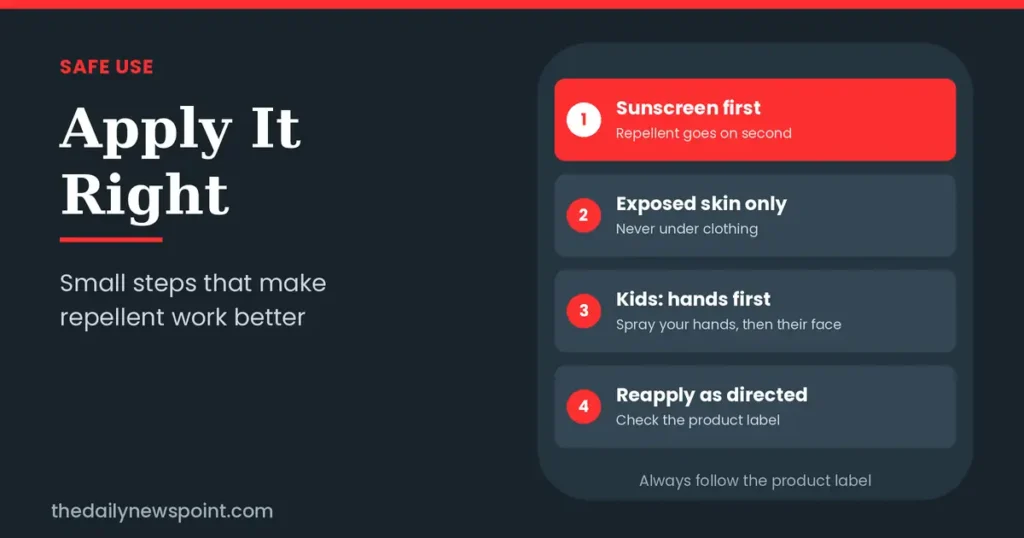
Even the best mosquito and insect repellent only works if it’s used the right way. Follow the label first, and keep these basics in mind:
- Apply sunscreen first and repellent second.
- Use it on exposed skin only. Don’t spray repellent on skin under clothing.
- For a child’s face, spray it on your own hands first and then apply it. Keep it away from a child’s hands, eyes, mouth, cuts and irritated skin.
- Reapply as directed on the label.
- Wash treated skin with soap and water once you’re back indoors, as many labels advise.
Common repellent mistakes
A few slip-ups can cost you protection, even when you’ve bought the best mosquito and insect repellent on the shelf.
- Skipping the label. Age limits, amounts and reapply times differ from product to product.
- Applying it in the wrong order. Sunscreen goes on first.
- Assuming “natural” means proven. Check for an EPA registration number.
- Spraying near the face. Spray it on your hands and apply it to your face instead.
- Forgetting the extra layers. Clothing and screens do a lot of the work.
Quick answers about the best mosquito and insect repellent
Which is the single best option? There’s no one winner. The best choice is an EPA-registered product with an ingredient from the CDC’s list that suits your age, your trip and how long you’ll be outside.
Does a higher percentage work better? It lasts longer, not stronger. Check the label for how many hours of protection to expect.
Is it safe for kids? Not for babies under two months. Beyond that, follow the label, and skip OLE and PMD products for children under three.
Do mosquitoes only bite at dusk? No. According to the CDC, mosquitoes bite day and night, so protection is worth thinking about at any hour.
The bottom line on the best mosquito and insect repellent
Pick an EPA-registered product, match the ingredient to your situation and follow the label every time. Add long sleeves, nets and screens where you can. That combination is the best mosquito and insect repellent plan most people will ever need. For more detail, the CDC’s page on preventing mosquito bites is a solid next read.
This article offers general information and isn’t medical advice. Always follow the product label, and talk to a healthcare provider about travel to areas with mosquito-borne diseases.
Read More At: TheDailyNewsPoint
Contact Us At: TheDailyNewsPoint