


Signs of leaky gut are among the most searched digestive symptoms online, and also among the most misunderstood. If you’ve typed “what is leaky stomach” into a search bar, you’re in good company. The term most people mean is leaky gut, and the “stomach” part is a bit off, because the lining being discussed belongs to the intestines.
Here is the honest version up front. A gut lining that lets too much through is a real, measurable thing in some medical conditions. “Leaky gut syndrome” as a standalone diagnosis that explains a long list of symptoms is not officially recognized. That gap between the science and the buzz is why the topic confuses so many people.
This guide explains what leaky gut means, lists the signs of leaky gut people commonly report, explains why those signs aren’t proof of anything on their own and tells you when it’s time to see a doctor.
What is leaky gut, and is “leaky stomach” the same thing?
Your intestinal lining is semi-permeable. It’s designed to let nutrients through into your body while keeping harmful things out. “Leaky gut” is the everyday name for increased intestinal permeability, the idea that the lining lets more through than it should, including bacteria and larger food particles.
“Leaky stomach” isn’t a medical term. People use it as a loose version of leaky gut, but the stomach and the intestines are different organs, and the permeability talk is about the intestines.
The key distinction is this. Increased permeability does show up in certain conditions, including celiac disease, Crohn’s disease, irritable bowel syndrome (IBS), diabetes, chronic liver disease and food allergies. What’s not established is that a general “leaky gut syndrome” exists on its own and causes everything from fatigue to rashes. UPMC’s health team sums it up in its overview of leaky gut and intestinal permeability, noting that scientific evidence for the syndrome is very limited and that most of the claims around it are unproven.

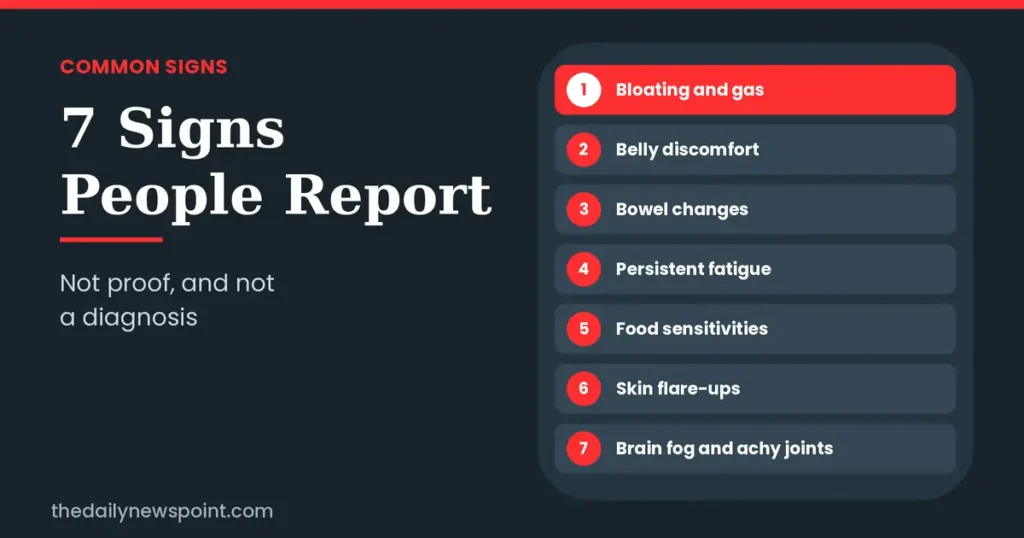
7 common signs of leaky gut people report
The signs of leaky gut that people describe are real symptoms, but they’re also common and non-specific. Treat this list as things worth noticing, not a checklist for self-diagnosis.
1. Bloating and gas
This is the most commonly mentioned one. Frequent bloating or gas after eating is also a hallmark of IBS, food intolerances and other digestive problems.
2. Belly discomfort
Cramping, aching or general abdominal discomfort that keeps coming back. It deserves attention whatever the cause.
3. Changes in bowel habits
Chronic diarrhea, chronic constipation or swings between the two. Ongoing bowel changes are a reason to see a doctor in their own right.
4. Persistent fatigue
Feeling tired for weeks without an obvious reason. Fatigue has a long list of possible causes, including poor sleep, nutritional gaps, hormone issues and mental health conditions.
5. Feeling unwell after certain foods
Some people connect symptoms with particular foods. That can point to a food intolerance, an allergy or celiac disease, all of which a doctor can test for.
6. Skin flare-ups and rashes
Rashes and other skin problems are sometimes blamed on the gut. They can have many causes, so a skin or allergy check is more useful than guessing.
7. Brain fog, headaches and achy joints
These come up often in online lists. They’re also among the least specific signs of leaky gut, which is why doctors look for other explanations first.
Why signs of leaky gut aren’t proof of a diagnosis
There’s no validated test that diagnoses leaky gut syndrome. Some companies sell blood or stool tests that claim to, but none has been proven to confirm it, and symptoms alone aren’t enough. Doctors can measure intestinal permeability in a research setting, but that’s not the same as diagnosing a syndrome.
The other problem is overlap. Nearly everything on the list above can also be a sign of celiac disease, IBS, inflammatory bowel disease or an issue outside the gut entirely. If you assume it’s “just leaky gut,” you risk missing something that has a proper treatment. A thorough check is also the only way to find out whether another condition is behind it.
What can raise intestinal permeability?
Researchers are still working this out, but some factors are linked to higher permeability:
- Certain conditions, such as celiac disease, Crohn’s disease, IBS, diabetes and chronic liver disease.
- Chronic inflammation.
- Certain medicines. If you take something regularly and notice digestive changes, ask your doctor or pharmacist about it.
- An imbalance of gut bacteria, sometimes called dysbiosis.
Gluten gets blamed a lot. Research suggests it raises permeability mainly in people with conditions like celiac disease or IBS, not in everyone, so cutting it out isn’t a fix for the general population.
When signs of leaky gut mean it’s time to see a doctor
Don’t wait it out if your symptoms keep coming back or keep getting worse. Get checked promptly if you notice blood in your stool, unexplained weight loss, a fever, severe or persistent belly pain or symptoms that wake you at night. A primary care doctor can start the process, and a gastroenterologist can look for the real cause.
It helps to bring a short symptom diary, a list of what you eat and any medicines or supplements you take. That gives the doctor far more to work with than the phrase “leaky gut.”
Ways to support your gut without chasing a cure
There’s no standard treatment for “leaky gut syndrome.” If a doctor finds an underlying condition, treatment focuses on that. While you wait for answers about your signs of leaky gut, a few low-risk habits support digestion in general: a varied diet with plenty of fiber, regular movement, good sleep and ways to manage stress.
Stress doesn’t cause every digestive problem, but for many people it makes symptoms feel worse. Our guide to the best exercises for stress relief has simple options you can try. Be careful with cleanses, expensive “gut healing” products and supplements, and talk to a healthcare provider before starting any of them.

Common mistakes with signs of leaky gut
- Self-diagnosing. Matching your symptoms to an online list is not a diagnosis.
- Cutting out many foods at once. Doing this without guidance can leave you short on nutrients and hide the real trigger.
- Paying for unproven tests. No validated test exists for leaky gut syndrome.
- Ignoring red flags. Blood in the stool or unexplained weight loss needs medical attention, not a supplement.
Quick answers about signs of leaky gut
Is leaky stomach the same as leaky gut? People use the terms interchangeably, but “leaky gut” is the more accurate phrase, since it’s the intestines that are being discussed.
Is leaky gut real? Increased intestinal permeability is real and measurable in some conditions. “Leaky gut syndrome” as a stand-alone diagnosis is not officially recognized.
Can a test confirm it? Not reliably. There’s no validated test for diagnosing leaky gut syndrome, and symptoms alone aren’t enough.
Can it be cured? There’s no standard treatment for the syndrome. Doctors treat any underlying condition they find and focus on overall gut health.
The bottom line on signs of leaky gut
The signs of leaky gut people describe, like bloating, fatigue and bowel changes, are real and worth taking seriously. But they’re not unique to leaky gut, and the “syndrome” isn’t an official diagnosis. The smartest move is to get your symptoms checked so you can find what’s actually going on. For more wellness guides, browse the Health section of The Daily News Point.
This article offers general health information and isn’t medical advice. See a healthcare professional about persistent or severe symptoms.
Read More At: TheDailyNewsPoint
Contact Us At: TheDailyNewsPoint