

Flying roaches have a talent for showing up at the worst possible moment. It’s ten at night, the porch light is on, you’re carrying groceries, and something the size of your thumb comes whirring out of the dark and lands near your shoe. Nobody has ever stayed calm in that moment, and nobody has ever been blamed for it.
Here’s the good news. Most roaches don’t fly at all, and the ones that do are clumsy about it. Knowing which species take to the air, why they do it and what draws them toward your house turns a panic into a plan.
This guide covers the species behind flying roaches, how to tell them apart, why they show up at night and seven practical ways to keep them out.
Can roaches really fly?
Yes, some can. Plenty of roaches have wings, but having wings and using them well are two different things. Most roaches would rather run, and they’re faster on foot than in the air. The ones that fly tend to make short, awkward trips, or they glide from a high spot to a low one.
Flight is an adult skill, too. Baby roaches, called nymphs, don’t have working wings yet, so a roach you see flying is a full-grown one. Warm, humid weather makes takeoff easier, which is why flying roaches are far more common in summer and in the southern United States.
Which roaches can fly?
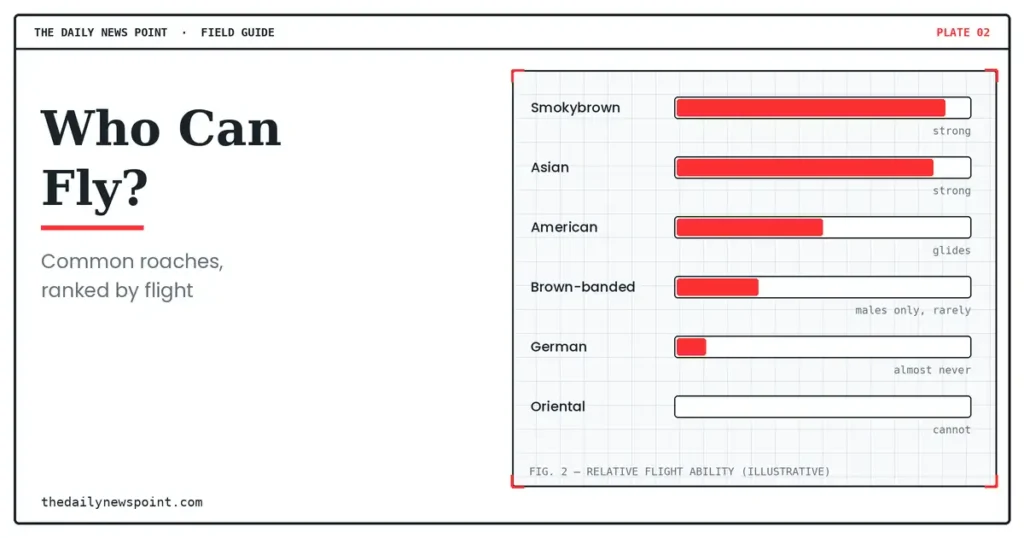
Four species cause most of the household panic in the U.S.: American, German, Oriental and smokybrown, according to Texas A&M entomologists. Of those, only some are fliers. This table covers the usual suspects.
| Roach | Flight ability | Quick ID |
|---|---|---|
| Smokybrown | Strong flier, drawn to lights at night | Dark, uniform mahogany; up to about 1.5 inches |
| Asian | Active flier that enters homes at night | Small and light brown; looks a lot like a German roach |
| American | Mostly glides short distances | Large; yellowish figure-eight pattern behind the head |
| Brown-banded | Males only, usually when disturbed | Small, with pale bands across the body |
| Wood roaches | Males fly to lights, rarely live indoors | Outdoor species that wander in by accident |
| German | Almost never flies | Small, with two dark stripes behind the head |
| Oriental | Cannot fly | Dark and shiny, with short wings |
The Asian cockroach is the one people often confuse with the German roach, because they look so alike. The easy tell is behavior. The Asian species flies readily and heads for light, while the German species almost never does. Texas A&M’s Asian cockroach page is a good reference if you suspect that one.
Why do flying roaches fly?
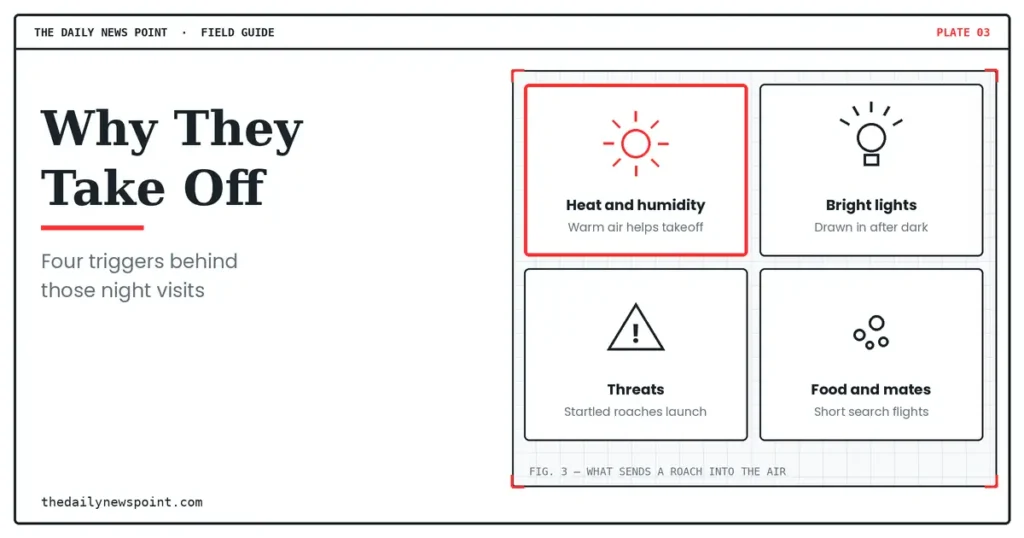
They don’t fly for fun. Roaches mostly take to the air for a handful of reasons:
- Heat and humidity. Warm air helps them lift off, so summer evenings are prime time.
- Light. Several species, including smokybrown and Asian roaches, are drawn to lights at night, which explains the porch and window visits.
- Threats. A startled roach may take off to escape, especially a male brown-banded roach.
- Food and mates. Roaches on the move sometimes use short flights to search for food or a partner.
The University of Florida Extension notes that small roaches such as the Asian species can fly into homes, which matches what many people see at dusk. You can read it in their post on small cockroaches flying into homes.
Are flying roaches dangerous?
Not in the way people fear. Flying roaches don’t attack people, and they aren’t aiming for you. The real concerns are indirect. Cockroach droppings, saliva and shed skin can trigger allergies and asthma in some people, and roaches can pick up and spread germs as they travel across surfaces. That’s why you don’t want them near food or in a kitchen.
If anyone in your home has asthma or allergies, take sightings seriously and clean up promptly.
How to tell the fliers apart
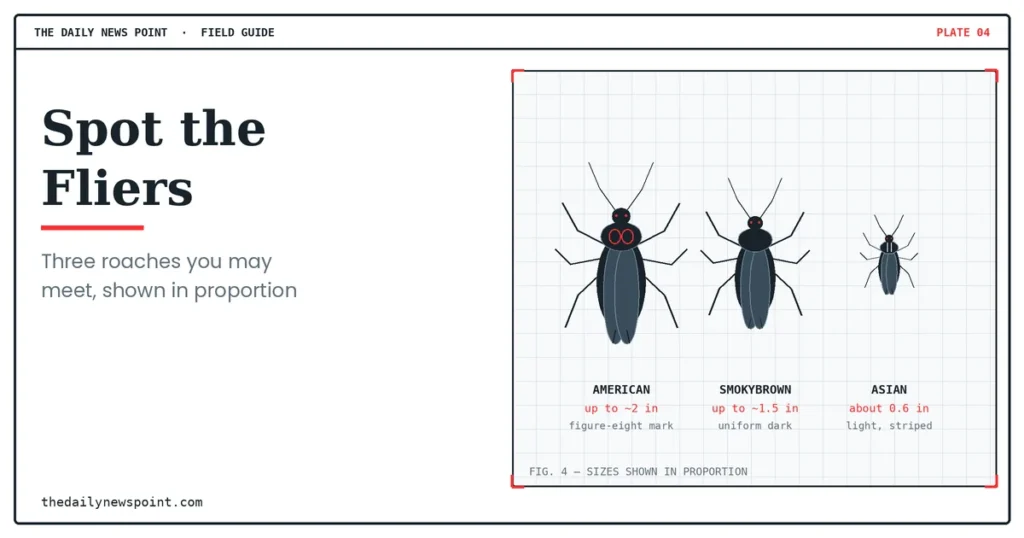
Identification matters because the fix depends on the species. A few quick clues help:
- Color. Smokybrown roaches are a uniform dark mahogany. American roaches have a yellowish pattern behind the head, and the Asian roach is smaller and lighter.
- Size. American roaches are the largest, reaching around two inches. The Asian roach is roughly five-eighths of an inch.
- Behavior. A small roach that zooms to a lit window is probably Asian. A large roach that drops from a ceiling in a glide is probably American.
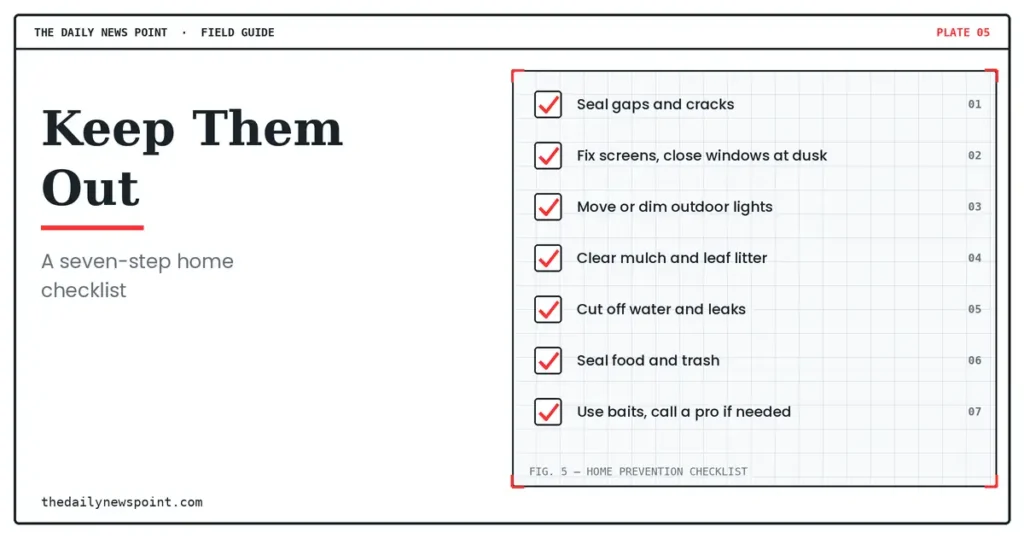
7 ways to keep flying roaches out
You can’t control what flies by, but you can make your home a lot less inviting.
1. Seal the gaps
Check around doors, windows, pipes and vents. Weatherstripping, door sweeps and caulk close the small openings roaches use to get in.
2. Fix screens and close windows at dusk
Torn screens are an open invitation. Repair them, and keep windows and doors closed in the evening during roach season.
3. Rethink your outdoor lighting
Bright lights next to doors pull insects in. Move fixtures a little away from entrances, switch lights off when you don’t need them, and consider warm or yellow-toned bulbs, which tend to attract fewer insects.
4. Clear outdoor hiding places
Asian roaches live outdoors in places like mulch, leaf litter and lawns, and smokybrown roaches shelter around trees and landscaping. Keep mulch and woodpiles away from the foundation, clear leaf litter and clean out gutters.
5. Cut off water
Roaches need moisture. Fix leaks, clear clogged drains and get rid of standing water. That helps with mosquitoes, too, and our guide to the best mosquito and insect repellent covers the skin-protection side of summer evenings.
6. Keep food and trash sealed
Store food in sealed containers, wipe up crumbs, don’t leave pet food out overnight and use trash cans with tight lids. American roaches, in particular, love garbage and compost.
7. Use baits and call in help when needed
Bait stations and traps can reduce roach numbers indoors. Follow the label and keep products away from children and pets. For Asian roaches, Texas A&M notes that indoor insecticide applications have been ineffective because so few enter a house at night, so control is mostly about the outdoors. The University of Florida’s guide to cockroaches and their management explains the integrated approach in more detail.
What to do when a roach is already inside
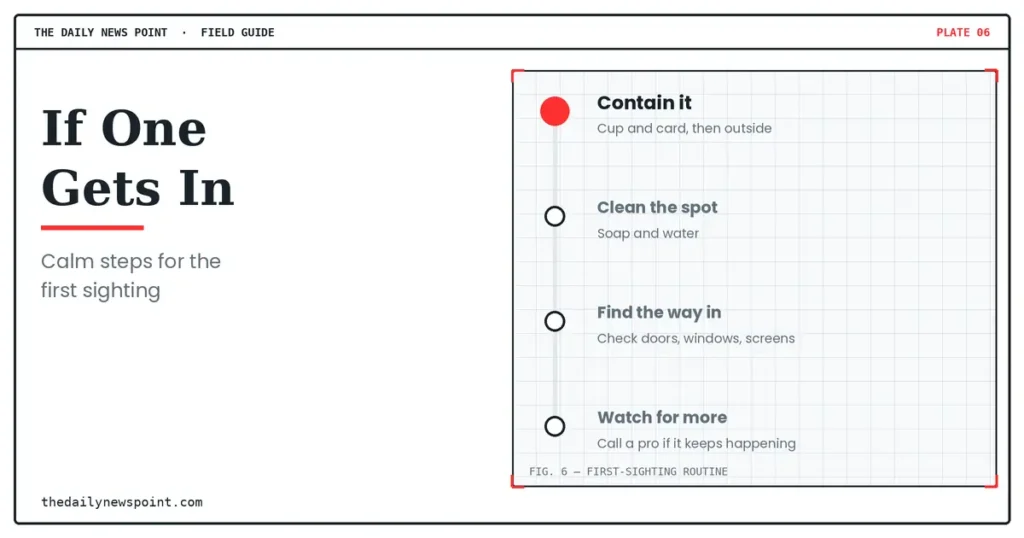
Stay calm. A flying roach is far more scared of you than you are of it. Here’s a simple routine:
- Contain it. A cup and a stiff piece of paper let you trap and move it outside.
- Clean the spot. Wipe the area with soap and water, especially if it landed near food.
- Find the way in. Check the door, window or screen it likely used.
- Watch for more. One roach after a hot night isn’t an infestation. Several in a week might be.
When to call a pest professional
Roaches are mostly nocturnal, so seeing them in daylight is a sign of crowding. Call a professional if you keep seeing roaches flying indoors, if you find droppings or egg cases, or if anyone in the home has asthma or allergies. If you rent, tell your landlord right away.
Common mistakes with flying roaches
- Spraying indoors for an outdoor problem. If the roaches are coming from outside, indoor sprays often miss the source.
- Leaving the porch light blazing. It works like a beacon.
- Guessing the species. Different roaches need different fixes.
- Using sprays near food. Always follow the label.
Quick answers about flying roaches
Do flying roaches fly at people? No. They’re drawn to light and heat, and their flight is erratic, which is why it can feel like they’re aiming for you.
Do they bite? Roaches rarely bite people, and the more realistic risks are allergens and germs.
Why are they in my house at night? Many flying roaches are active after dark and head for lights.
Can baby roaches fly? No. Only adults have working wings.
The bottom line on flying roaches
Flying roaches are mostly a summer, warm-climate problem, and the species that fly are fairly predictable. Seal the gaps, tame the outdoor lighting, clear the hiding places and keep food and water under control. If you want more everyday home and wellness guides, browse the Health section of The Daily News Point.
This article offers general information. Follow product labels, keep pest products away from children and pets, and consult a licensed pest professional for ongoing infestations.
Read More At: TheDailyNewsPoint
Contact Us At: TheDailyNewsPoint