
How to choose a sleeping bag comes down to a handful of decisions: how cold it will get, what it’s filled with, what shape suits the way you sleep and how much weight you’re willing to carry. Get those right and a night outdoors feels cozy. Get them wrong and you’ll be awake at 3 a.m., shivering or sweating, staring at a tent roof.
The trouble is the labels. Temperature ratings come in two or three numbers, fill is described in “fill power,” and shapes have names like mummy and semi-rectangular. None of it is hard once you know what each term means, and a few simple rules cut through most of the confusion.
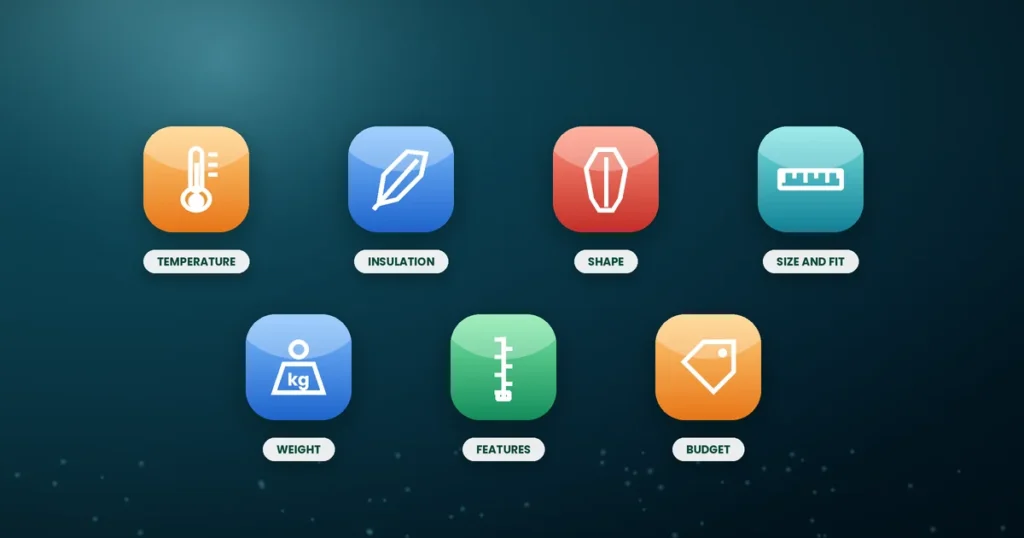
This guide explains how to choose a sleeping bag step by step, covers seven things to check before you buy, and ends with a quick cheat sheet for different trips.
Start with how you’ll use it
Knowing how to choose a sleeping bag starts with picturing the trip. A bag for car camping in summer has very different needs from one for a three-night mountain hike. Car campers can choose roomy bags and not worry about weight. Backpackers need something light that packs small. If you camp in cold weather, warmth and the rest of your sleep setup matter more than anything else.
| Trip | Good fit | Why |
|---|---|---|
| Car camping | Rectangular or semi-rectangular, synthetic or down | Roomy, and weight doesn’t matter |
| Backpacking | Mummy, ideally down or light synthetic | Every ounce counts |
| Cold weather | Mummy with a low rating and a warm pad | Heat retention beats comfort |
| Warm nights and travel | Light bag, liner or blanket-style bag | Less insulation, less bulk |
7 things to check as you decide how to choose a sleeping bag
1. Temperature rating
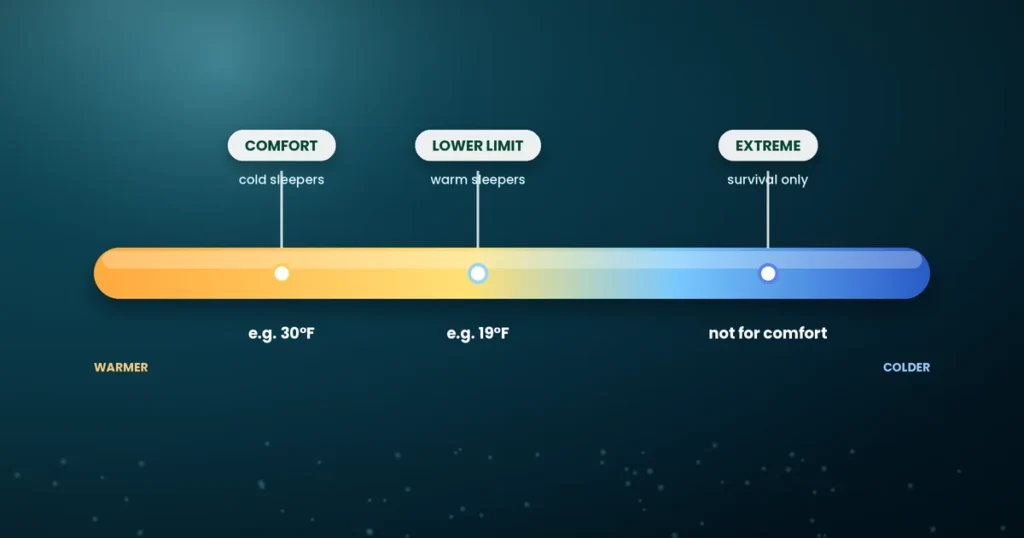
REI’s advice on how to choose a sleeping bag is simple: pick a bag rated a little lower than the coldest night you expect, because you can always unzip if you get hot. Look for an ISO or EN rating, which is a standardized test that lets you compare bags across brands. Each tested bag gets a comfort rating and a lower limit rating.
- Comfort rating. The temperature at which a cold sleeper stays comfortable.
- Lower limit rating. The temperature at which a warm sleeper stays comfortable.
- Extreme rating. A survival number, not a comfort number. Don’t plan around it.
If a label says only “20°F” with no mention of comfort or limit, it’s probably the brand’s own estimate and not a standardized test. Even tested ratings assume you’re wearing long underwear and socks and sleeping on a well-insulated pad, so they’re a guide, not a guarantee. For example, one tested women’s bag lists a comfort rating of 30°F and a lower limit of 19°F. Same bag, two numbers, which is why reading the label matters when you’re learning how to choose a sleeping bag. Cold sleepers should lean on the comfort number, and warm sleepers can use the limit number. REI’s guide to choosing backpacking sleeping bags goes into more detail.
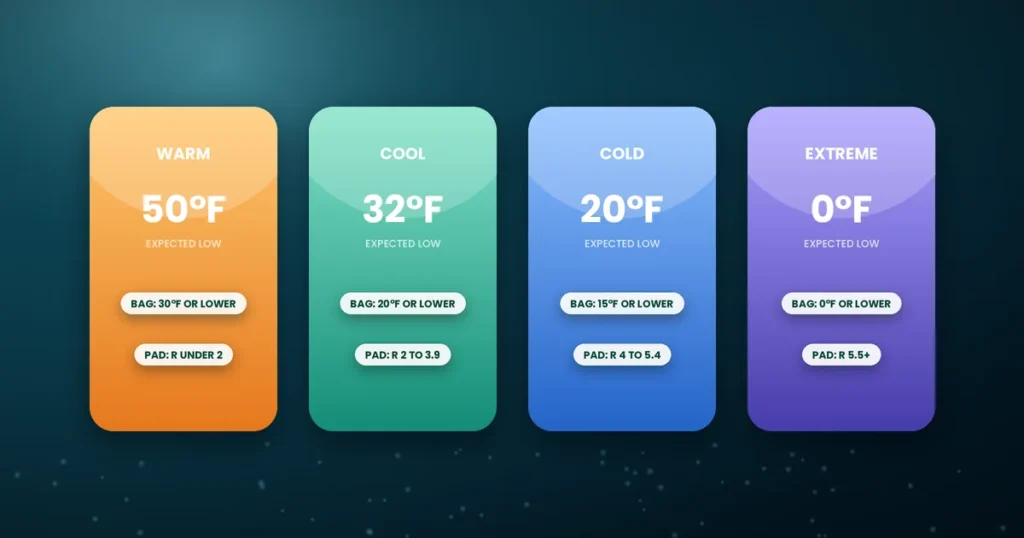
Your pad matters just as much as your bag. REI pairs expected lows with pad R-values and bag ratings like this:
| Conditions | Expected low | Pad R-value | Bag rating |
|---|---|---|---|
| Warm | 50°F (10°C) | Under 2 | 30°F or lower |
| Cool | 32°F (0°C) | 2 to 3.9 | 20°F or lower |
| Cold | 20°F (−7°C) | 4 to 5.4 | 15°F or lower |
| Extreme | 0°F (−18°C) | 5.5 or higher | 0°F or lower |
2. Insulation: down or synthetic
Down is the lightweight, compressible choice, and it’s the warmest for its weight. Its quality is measured by fill power, which ranges from about 450 to 1,000. A higher number means the down lofts higher and traps more warmth for less weight, but it costs more. Down also loses much of its insulation when wet, and it comes from waterfowl, so some buyers look for responsibly sourced options.
Synthetic fill is heavier and bulkier, but it’s cheaper and holds heat better when damp. Outdoor Life’s roundup on how to choose a sleeping bag points out that most budget bags use synthetic fill, and that high-fill-power down can save a lot of weight.
3. Shape
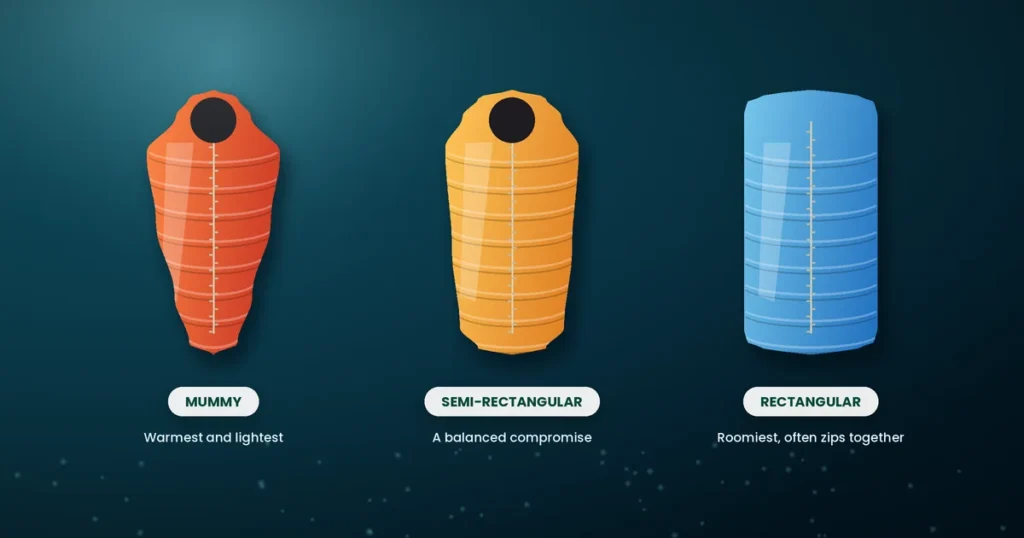
Shape affects warmth, weight and room to move. Mummy bags taper at the head and feet, trap heat well and weigh the least. Semi-rectangular bags are a compromise, with more space but a bit less efficiency. Rectangular bags are roomy and often zip together with another bag, but they’re heavier and let more heat escape. REI’s sleeping bag buying guide offers one maxim: look for the smallest bag you can fit in and still feel truly comfortable.

4. Size and fit
Check the length and girth against your height and shoulders. A bag that’s too long leaves cold air to heat, and one that’s too tight compresses insulation. Many brands make women’s bags with extra insulation in the torso and feet, and long sizes for taller sleepers.
5. Weight and packed size
If you carry it, compare weight and compressed volume, not just temperature. Insulation type and shape are the two biggest factors. Down in a mummy shape is lightest, while a rectangular synthetic bag is heaviest.
6. Features
- Hood and draft collar to seal heat around your neck.
- Zipper draft tube to stop cold air coming through the zipper.
- Pad sleeve to keep you from sliding off your pad.
- Water-resistant shell for damp tents and dew.
7. Budget and care
Set a budget, but weigh it against how often you’ll sleep outside. Synthetic bags cost less, and down is a long-term investment. Whatever you buy, store it loose instead of compressed, and follow the care label when you wash it.
How to choose a sleeping bag for your sleep style
Your body matters as much as the forecast. Cold sleepers, and many women, should lean on the comfort rating and go a little warmer than the forecast. Warm sleepers can rely on the lower limit. Side sleepers and restless sleepers often prefer a semi-rectangular or rectangular bag for extra room, while back sleepers do fine in a mummy. Tall sleepers should look for long sizes, and couples can look for rectangular bags that zip together or a double bag.
Don’t forget your sleeping pad
If you’re still working out how to choose a sleeping bag for cold weather, start with the pad. Heat is lost to the ground as much as to the air. Pad warmth is measured by R-value, where higher means warmer. For ground camping, a pad with an R-value of 2 or more is a good baseline, and for snow you’d want 5 or more. R-values add, so stacking two pads works too.
Common mistakes when choosing a sleeping bag
- Trusting a single number. Check whether it’s the comfort or limit rating.
- Ignoring the pad. A great bag on a thin pad still leaves you cold.
- Buying too big. Extra space is extra cold air to warm.
- Forgetting your own sleep style. Cold sleepers should go warmer than the forecast.
- Storing it compressed. It can squash the insulation over time.
Quick answers about how to choose a sleeping bag
What temperature rating should I get? Choose one rated lower than the coldest temperature you expect, using the comfort rating if you sleep cold.
Is down better than synthetic? Down is lighter and warmer for its weight. Synthetic is cheaper and better when damp. The best choice depends on weight, budget and weather.
Which shape is best? Mummy is warmest and lightest. Rectangular is roomiest. Semi-rectangular is a good middle ground.
How to choose a sleeping bag for kids? Kids grow quickly, so many parents pick a synthetic bag with an adjustable length and a rating a bit warmer than the forecast. Always check the size chart and follow the manufacturer’s guidance.
Do I need a liner? Not always. A liner can add a few degrees of warmth and keeps the bag cleaner.
The bottom line on how to choose a sleeping bag
Now you know how to choose a sleeping bag: pick the temperature first, then the insulation, shape and size that fit your trip. Pair your bag with the right pad, and you’ll sleep well in a lot more places. Before your next night outdoors, our guide to the best mosquito and insect repellent helps you pack for bugs too, and the Travel section of The Daily News Point has more trip planning guides.
This article offers general gear information. Ratings are guides, not guarantees, so check the manufacturer’s specifications and consider the conditions for your trip.